
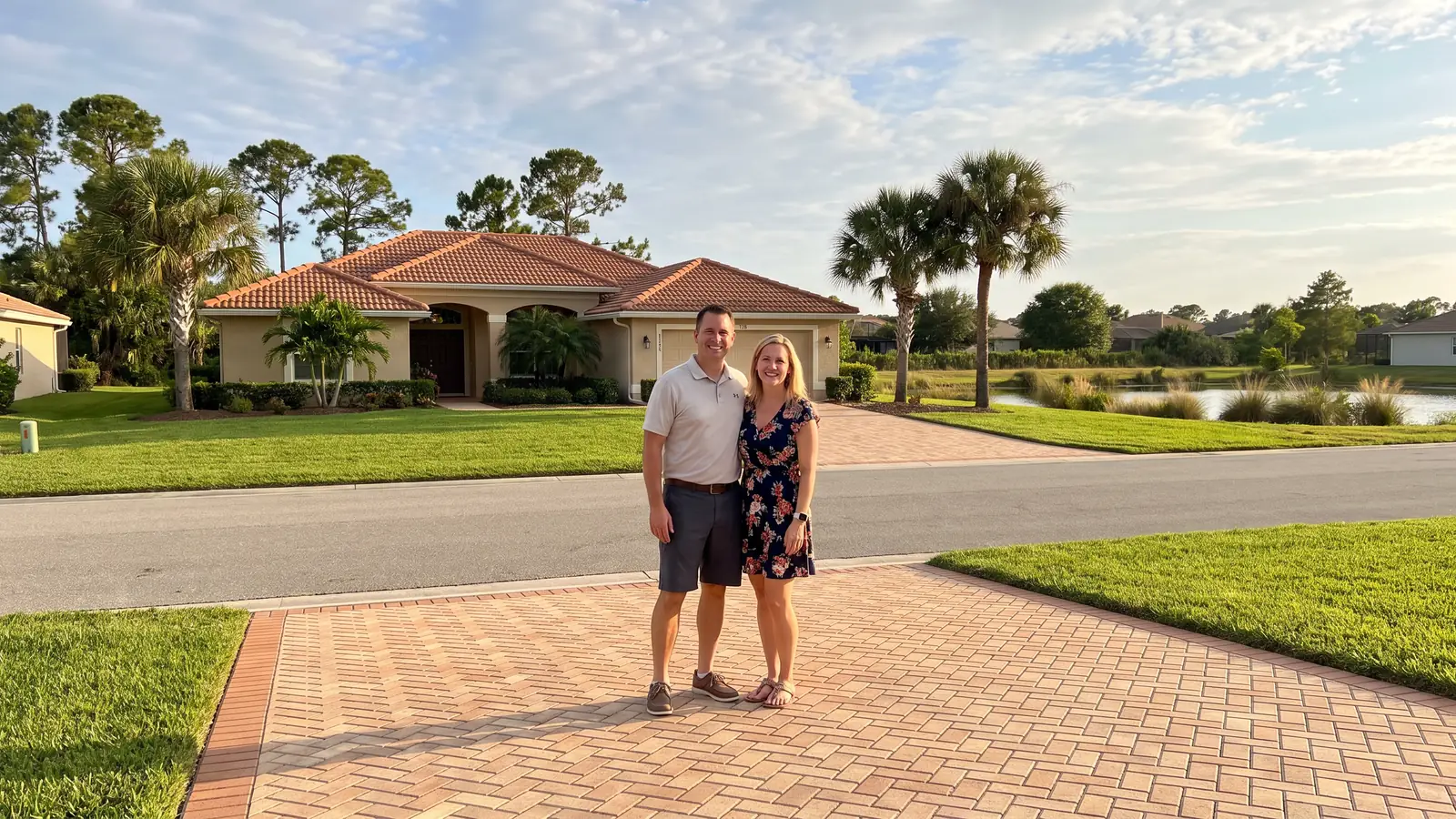
Paver sealing for Cocoa homes
Paver Sealing in Cocoa, FL
Cocoa Village, a coquina mansion and a river road share one city, so call (321) 275-3255 for a free paver estimate.
- Brings out deeper paver color
- Fresh joint sand helps lock pavers in place
- Gives weeds less room to grow
- Makes the surface easier to keep clean
- Free estimate, no obligation
Request a Free Estimate
Free, no obligation.
Fast, careful paver sealing in Cocoa
Paver sealing in Cocoa reaches the old streets near the river and the newer blocks across the city. A local contractor can clean, re-sand and seal your driveway, walk, patio or pool deck, with a free estimate to start. request your free estimate and a reply should reach you within 1 business day, and often earlier.
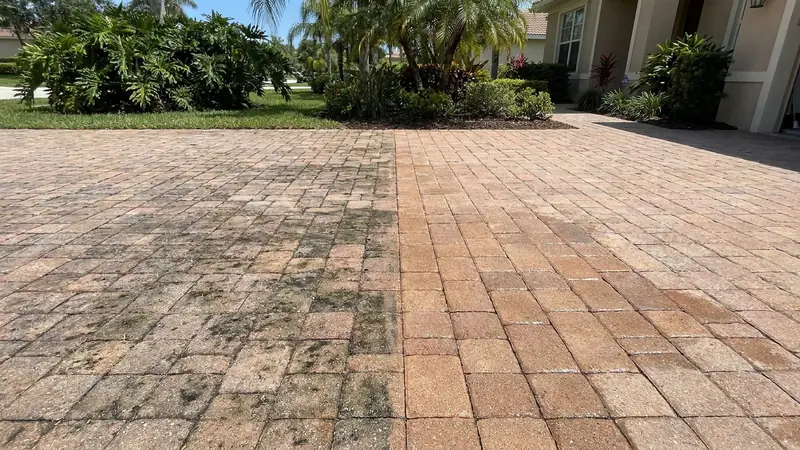
Dishwater gray with green in the joints is how many Cocoa patios look before cleaning. Fresh sand and sealer can bring one steady color back. Sealing slows wear and blocks stains, though fading still happens. Describe your street over the phone at (321) 275-3255 if you would rather talk first.

Why hire a local paver sealing contractor in Cocoa?
Cocoa has been a town since 1895, and its homes come from many different decades, so no two pavers have the same history. To hear how a local contractor reads yours and what it means for the price, request your free estimate.
Free visit, then a price
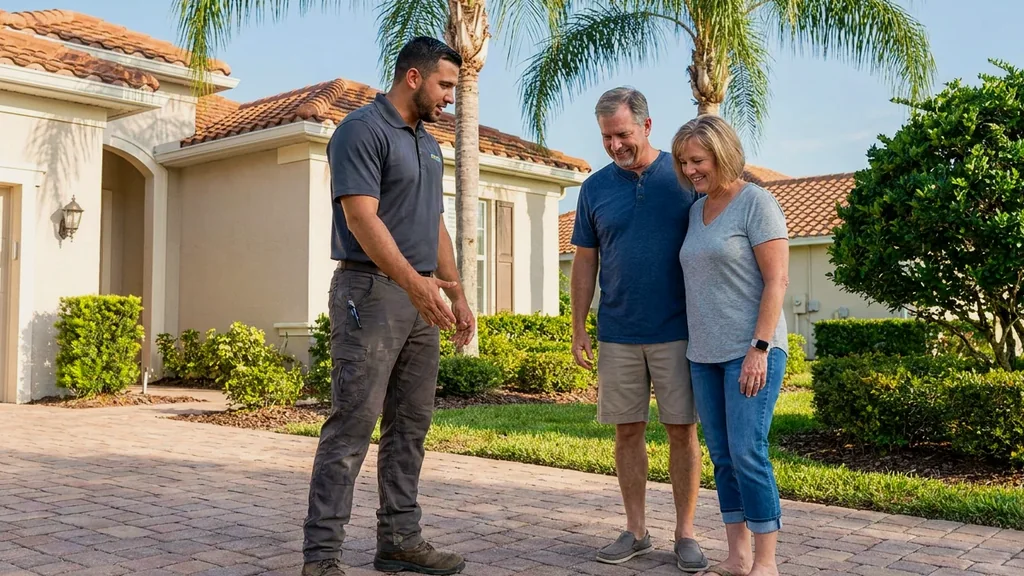
A contractor visits, measures every paver and names a price. The visit and the quote are free.
A yardstick for the price
Set any Cocoa quote beside $1.85 to $4.00 per square foot, the Space Coast span for washing, sanding and sealing.
Two finishes to try
Older homes often suit matte, which stays natural. Semi-gloss deepens color. A spare paver shows both before you commit.
Time to think it over
Take the quote home and think. Book when you are ready, or do not book at all.
Get Your Free Estimate in Cocoa
Tell us about your pavers in Cocoa.
Free, no obligation
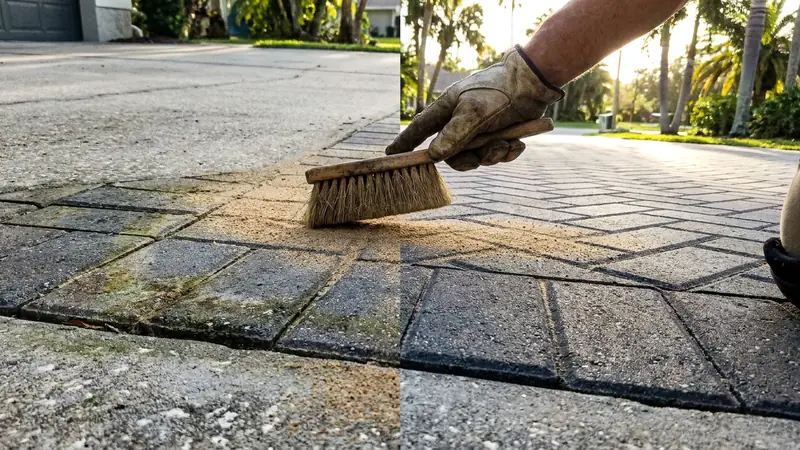
What paver problems show up most in Cocoa?
Sand washed out by wet-season storms
Rain here comes in one long season. A National Weather Service record from a north Melbourne station found that 64 percent of yearly rain falls in 138 days, and Cocoa sits on the same coast. Hard rains can rinse sand out of paver joints, and bare joints invite weeds and ants. Fresh sand goes in first, or the coat has nothing to hold. After a rainy summer, look at the joints, because thin ones mean the sand is due. Adding sand back is a small job, yet it protects the whole surface. Most of Cocoa's rain comes in one wet season of about 138 days, going by a 22 year Melbourne record. Joints can sit half empty for much of it. The city covers 15.4 square miles, and 2.1 of them are water. With that much open water close by, rain and wind reach most streets. Steps, low corners and the edges of walks usually lose sand first, so a contractor checks those before anything else.
Green film along the river side
Indian River Drive runs along the lagoon, and Riverfront Park sits at the end of Cocoa Village. According to Landscape Ontario, pavers stay clear of algae unless shade is heavy. Under oaks and along damp edges, a green film can start and stay. Wash water on the river side should stay off plants. Washing it off comes before any sealer, which would only lock it in. Open, sunny walks often stay clear, since algae needs shade and damp. A north-facing wall or a thick hedge can keep a walk damp for hours. Streets near Riverfront Park sit close to a lagoon that averages four feet deep and moves more with wind than tide. A shaded walk in that setting stays damp, and green growth follows damp. Riverfront Park and the Indian River Drive by-pass both run beside the lagoon. Walks and patios in shade there stay damp longer than a sunny drive. A green edge usually shows first on the shaded side of a step or planter. The wash lifts it, and the stone has to dry before the coat. The lagoon averages four feet deep, a shallow, wind-moved body of water beside the village.
Coats nobody wrote down
Cocoa's housing count grew from 8,064 units in 2000 to 9,182 in 2020, which is a small change. That means most homes are older and have had several owners. A drive can hold a coat that no one ever recorded. If a solvent-based coat sits underneath, a water-based one is out, which is why the old coat gets read first. If you have a receipt or a contractor's name from past work, keep it handy. A peeling or patchy coat is the clue that the old product needs attention first. Homes built in different decades carry different coats. The population rose from 3,098 in 1940 to 12,244 in 1960, so many streets mix old and newer pavers. Cocoa had a hardware store by 1885, and the 2020 census counted 9,182 housing units, 10.6 percent of them vacant. A home that sat empty or changed hands may have gone years without a coat. That is why the first visit reads the surface instead of guessing. The Historic Cocoa Post Office dates to 1939, and the Cocoa Village Playhouse began as the Aladdin Theatre, so the village streets carry many older buildings. After the Great Freeze the population fell to 382 by 1903, then grew again, which leaves a housing mix that spans generations.
Fade on open driveways
A Cocoa driveway in open sun loses color season after season. A Melbourne paver company says sealing does not end normal fading. A coat slows wear and keeps stains from soaking in, though the sun keeps working. If your color has gone pale, ask the contractor to show you the matte and semi-gloss finishes on a spare paver. Quoted gaps run from two to five years, so that is the clock to hold yours against. Ask to see a matte sample and a semi-gloss sample in full sun. Wide drives with no tree cover take sun all day. Sun is what bleaches color out of a paver, and a drive faces it from first light. Cocoa's highest point is only 83 feet above sea level, so the land is low and open. A drive with no tree cover takes sun from morning to evening. Color fades most where nothing blocks that light.
Rust arcs from sprinklers
UF/IFAS notes that iron-rich irrigation water often leaves orange streaks on buildings. If your sprinklers throw water onto the walk, look for rust-colored arcs. The contractor treats those stains before sealing, because sealer would trap them. Ask how the stain will be treated, because rust left under a coat stays visible. Walks and drives near a lawn edge are the usual spots. Moving a sprinkler head is a separate fix, and the contractor can point out the heads that spray the walk. UF/IFAS Florida-Friendly Landscaping says orange streaks on buildings often come from irrigation water high in iron. Pavers take the same spray, so a stain tends to follow the reach of the sprinkler. Rust marks tend to form arcs that follow a sprinkler's spray. Treat them before sealing, since a coat locks in whatever sits on the stone. A contractor can test a small spot first and see how the stain responds.
Do homes away from Cocoa Village get paver sealing too?
Yes, every part of the city can book a visit. Cocoa covers 15.4 square miles, 13.46 percent of it water, so the village is only one corner of it. US 1 is the main north-south road, and Eastern Florida State College and the University of Central Florida both have Cocoa campuses. Give your street when you request your free estimate.
The housing mix matters for pavers. The 2020 Census counted 9,182 homes in Cocoa and 10.6 percent of them were vacant, while about 34 percent of households were one person. Owners and landlords often want different things from a coat. Call (321) 275-3255 and say which you are, so the quote fits.
Indian River Drive is a scenic by-pass that runs beside the Indian River, and many homes on it sit close to the water. Where shade and damp meet, algae starts first. When this sounds like your walk, request your free estimate and say so.
What does paver sealing cost in Cocoa?
A Cocoa quote falls within the Space Coast span of $1.85 to $4.00 per square foot and covers the wash, joint sand and sealer. Size, surface shape and sealer type decide the rest. One drive with a side walk and a patio outweighs a single walk. request your free estimate and get a number for your pavers.
Extra steps raise a quote. Stripping a flaking coat, treating rust and refilling thin joints each take time, and gentler cleaning near old brick or stone takes more. Which of these apply at your Cocoa address? Call (321) 275-3255 and ask.
| Paved area | Typical example | Clean, sand and seal |
|---|---|---|
| 300 sq ft | Small patio or walkway | $555 to $1,200 |
| 600 sq ft | Two car driveway | $1,110 to $2,400 |
| 1,000 sq ft | Large driveway or pool deck | $1,850 to $4,000 |
| 1,500 sq ft | Driveway plus pool deck | $2,775 to $6,000 |
Math based on the $1.85 to $4.00 per square foot that Space Coast paver companies publish. Your contractor sets the actual price after seeing the surface. Repairs, leveling and stripping failed sealer are usually extra.
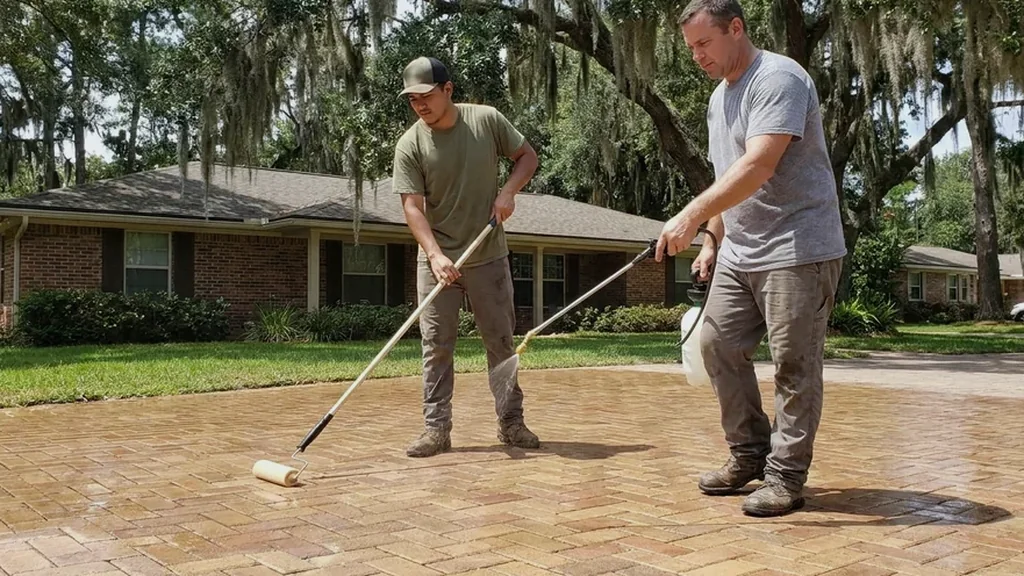
How does a paver sealing job work in Cocoa?
Walk the property
The visit starts with a walk around the drive, walks, patio and pool deck, noting drainage, shade and any coat already down. Existing sealer gets assessed first, a step a Melbourne paver company stresses. Point out low spots, and tell the contractor who sealed it last. Homes near Florida Avenue and Stone Street often have older brick or coquina nearby, so that gets noted too.
Wash off film and stains
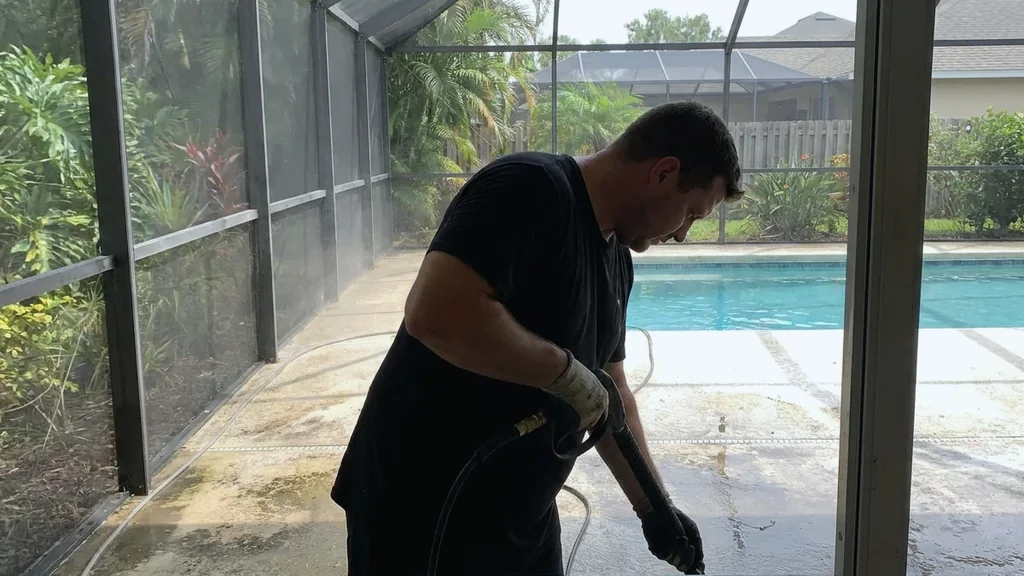
The wash lifts dirt, green film and stains, and rust gets its own treatment. Near old brick, coquina or stone, rinse water is kept low and the cleaner is picked with care, so the masonry is not harmed. True color shows once the surface is clean, which helps you choose a finish. Gentler cleaning takes longer, and the quote should say so. The Porcher House, finished in 1916 of coquina rock, shows how old masonry can sit near modern pavers in this city.
Restore the joint sand
Joints emptied by the wash get refilled. Landscape Ontario advises replacing the sand after power washing, and one Brevard company settles it with hydrocompaction. Full joints steady the pavers and keep weeds out, while thin ones let rain slip underneath. Sand goes in first, and the coat follows.
Hold for dry weather
Sealer only works on stone that has dried all the way through. In a long wet season the contractor may wait for a clear stretch and move your date if storms build. Shaded corners dry slowly, and a large job can be split across days. Morning dew counts too, so the earliest start is not always the right one.
Finish with your coat
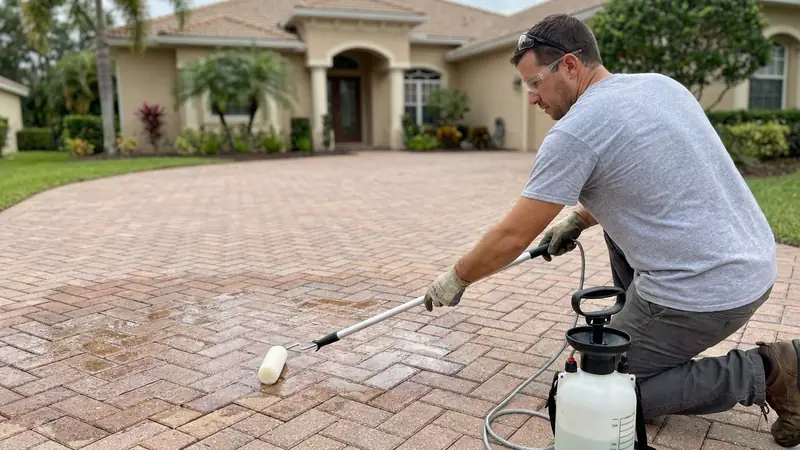
Last come the coats. A Brevard paver company puts down two, then lets the final coat cure for a day or two. Sun and shade on your drive decide where you land in the two to five year span from quotes. Matte hides scuffs better than a wet look, so picture tires and chairs. Ask for the product name on paper.
Complete paver services in Cocoa
Sealing a Cocoa driveway or patio follows a set order: wash, refill the joints, let everything dry, then roll on the coat. The order matters because sealer locks in whatever is still on the stone. A contractor can say how many hours each stage takes at your house, so call (321) 275-3255 with your address.
Drives, front walks, patios and pool decks all age differently. Tires grind a drive, feet wear a walk, and splashing keeps a pool deck wet. One visit can measure every surface you own and return a single price. To start that list, request your free estimate.
Whatever sealer is already down limits your choices, because a water-based coat cannot go over a solvent-based one. Then you pick matte or semi-gloss. Matte reads as natural beside an older home, while semi-gloss deepens color. Call (321) 275-3255 to compare both for your house.
Rain shapes the calendar in Cocoa. Most of it falls in one long wet season, and sealer needs stone that is dry through. A contractor can warn you about a likely delay before you book and suggest the next clear day. Choose a week that works for you, then request your free estimate.
Questions to ask before you hire
- Will you send a certificate of insurance before the day of the job?
- How long until we can walk on it, park on it and set the patio furniture back out?
- Which sealer do you plan to use on my pavers, and how does it hold up in Florida sun?
- How is the price figured, by the square foot or by the job, and what could change it once you see the pavers?
- Is the finish glossy or matte, and can I see a sample on a spare paver first?
- Do you add a non-slip grip additive on pool decks?
- Is the cleaning done with a surface cleaner or a hand wand, and does it lift the old sealer?
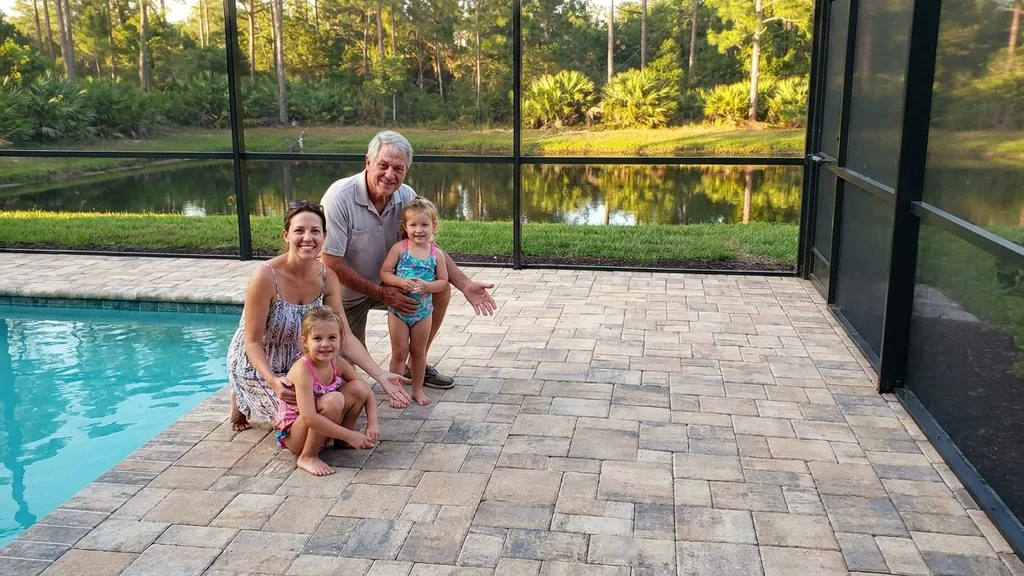
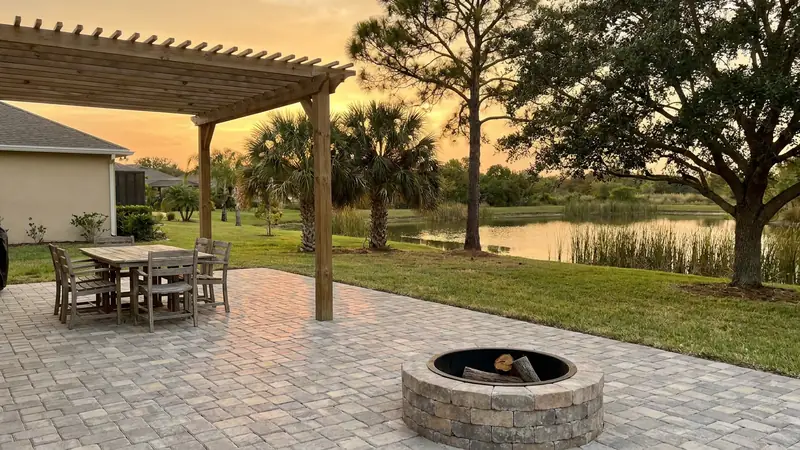
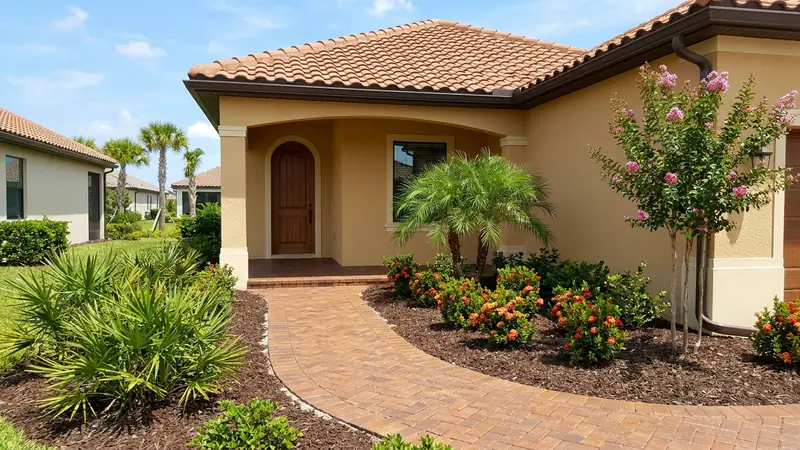
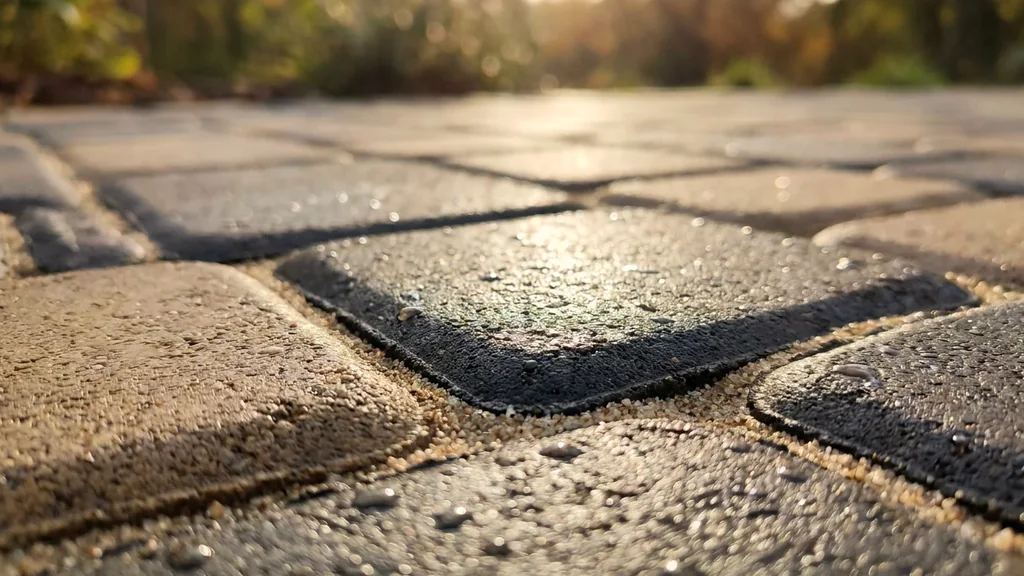
What do sealed pavers look like around Cocoa?
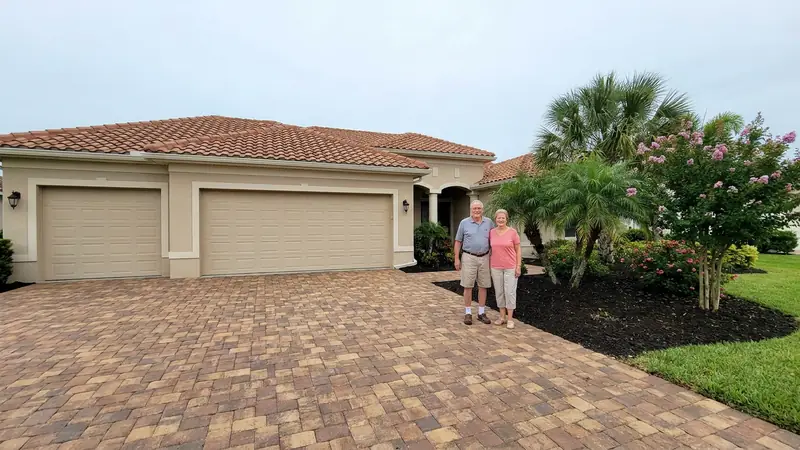
Why local matters in Cocoa
Cocoa is a mix of old and newer blocks, and a local contractor reads that mix at a glance. The 1885 hardware store, the 1895 charter and the growth after 1940 left different houses, which helps with guessing what lies under your pavers. Roads from US 1 to Indian River Drive are familiar ground, so travel and parking are planned ahead. A contractor who already works here is reachable at (321) 275-3255.
Local work also means care near older materials, such as the coquina rock of the Porcher House. Some homes near the village may have old brick or stone beside their walks. Rinse water and cleaners have to be chosen for those surfaces, because the wrong one can stain brick. request your free estimate to learn what a contractor does near old masonry.
Weather is the third piece. Heavy rain here comes in one long season, so a good sealing week means a clear, dry stretch. Someone who works the area every week knows when that is likely. For a date that holds, request your free estimate and say which days work for you.
How does Cocoa's long history show up on its streets?
It shows in how the city grew in jumps. A hardware store opened in 1885, a fire took the business district in 1890 and the railway then spurred a rebuild. The Great Freeze of 1894 and 1895 ruined the citrus crop, and by 1903 only 382 people lived here. request your free estimate and mention it if your house dates from the rebuilding.
The space industry changed everything. Cocoa went from 3,098 people in 1940 to 12,244 in 1960, and visitors came to watch Cape Canaveral launches. Today Cocoa Village, Riverfront Park, the Cocoa Village Playhouse and the Porcher House keep that history visible, and Main Street has served the village since 1995. When your street is close to one of these, name it on a call to (321) 275-3255.
Frequently Asked Questions
How often should Cocoa pavers be resealed?
Most quotes land between two and five years. A drive in open sun that carries daily tires sits near the early end. A wet look scuffs sooner, so a busy Cocoa drive may need attention earlier.
Is spray or roll better for sealing Cocoa pavers?
Both applications work. Prep and even coverage matter more than the tool, and sealer needs a dry surface either way. Ask the contractor which method suits your Cocoa pavers and how many coats to expect.
How much does sealing cost for Cocoa pavers?
Across the Space Coast the span runs $1.85 to $4.00 per square foot to clean, sand and seal. Size, condition and sealer set your Cocoa total. A big drive plus a pool deck adds up even at one rate, so ask for the area in the quote.
Will a contractor seal my pavers in Cocoa?
Yes. A contractor looks over your pavers, names the sealer and finish, and gives a price. You choose the date, and a free estimate does not tie you to anything.
Can pavers beside old brick or coquina be cleaned safely?
Yes, with care. The Porcher House is built of coquina rock, and older masonry like that reacts badly to harsh cleaners. Rinse water stays low and the cleaner is chosen for the stone, so ask how that is handled before the visit. The contractor can test the cleaner on a hidden spot first.
What causes rust-colored arcs on Cocoa walks?
UF/IFAS says irrigation water high in iron often leaves orange streaks on buildings. Look at where your sprinklers spray, and ask the contractor to flag any spot that gets hit. Stains are treated before sealing.
Does a house near Cocoa Village or Riverfront Park get a different plan?
Often a little. Pavers near the river and under shade collect more damp and green film, while open sunny drives fade first. Say which you have when you ask, and the visit is planned around it. Cocoa Village runs along Florida Avenue to Stone Street and out to Riverfront Park, and the city sponsors more than 50 special events each year. Mention any event closures on your street so the visit can be timed around them.
Who decides on sealing if I rent in Cocoa?
The owner of the pavers decides. A tenant can request the estimate and pass it to the landlord, who picks the date and the finish.
What if my Cocoa pavers already have old sealer?
It must be checked first. A water-based coat is ruled out over a solvent-based one, and a Melbourne paver company says old sealer must be assessed. A Brevard company offers stripping to remove weakened sealer before a new coat.
Does sealer make Cocoa pavers slippery?
Sealing can change traction, and no coat makes pavers slip-proof. Wet outdoor surfaces call for care underfoot, a Melbourne company cautions. Tell the contractor if it is a pool deck, and ask for a sample on a spare paver.
What do I get from a free paver sealing estimate in Cocoa?
A look at your pavers, a measured area and a price for each step. Ask which sealer, finish and number of coats are planned, and how joint sand and stain treatment are handled.
How soon does a Cocoa estimate request get an answer?
A reply arrives within 1 business day, and often well before that. Have the street, the rough area and a few photos on hand. Say whether the pavers were sealed before and whether they sit near Cocoa Village or the river.
Ready for a Free Estimate in Cocoa?
Call (321) 275-3255 and tell us about your pavers.
Free, no obligation