
Start over on pavers with a tired or failed coat
Paver Restoration and Resealing in West Melbourne, FL
Call (321) 275-3255 for a free paver restoration estimate at your West Melbourne home.
- Brings out deeper paver color
- Fresh joint sand helps lock pavers in place
- Gives weeds less room to grow
- Makes the surface easier to keep clean
- Free estimate, no obligation
Request a Free Estimate
Free, no obligation.
Who handles paver restoration at West Melbourne homes?
A local contractor can restore and reseal the pavers at your West Melbourne, FL home, and an answer comes within 1 business day, usually much sooner. The visit and the estimate are free, and you decide whether to book. To start, call (321) 275-3255.
Restoration is for pavers that were sealed once and went wrong: a cloudy film, flaking patches, a yellow cast or color that never came back. The old coat comes off, the surface is washed, low spots and joints are fixed, and a new coat goes on dry pavers. Done well, the driveway reads as one even color again. Tell the contractor where the finish looks worst and request your free estimate.
Do my pavers need restoring or only a fresh coat?
Journeyman HQ, a paver care company, lists seven signs that old sealer has to come off. Peeling or flaking that lifts under tape is one. A white haze that washing will not clear is another. The rest are yellowing, blotchy gloss, water that soaks in within seconds, a thick plastic-like build-up and mold growing under the film. Look for several of these, not one, and call (321) 275-3255 if you see them.
One sign alone may only call for a wash and a new coat. A dull driveway with thin sealer that is still bonded is a sealing job, and the paver sealing guide covers that. A film that peels or clouds is a restoration job. A contractor tests a small patch before choosing. To set up that test, request your free estimate.
Why does sealer turn cloudy or white on pavers?
Moisture is the usual cause. Western Interlock, a paver maker, says water hidden in the joints and the bedding under the pavers keeps sealer from bonding, and the cloudy spots appear when the pavers get wet or the sprinklers hit them. A surface can feel dry and still hold water below. Ask how a contractor checks for hidden moisture, and call (321) 275-3255.
Heat is the second cause. Western Interlock says the paver surface should stay under 90 degrees, and Groundworks Pavers and Turf, a Brevard company, says a surface above 90 during or soon after application can cause bond failure. West Melbourne highs average 91 degrees in July and August, so a black driveway in July sun is well past that mark. Start times matter, and you can request your free estimate.
Can a new coat go over the old one?
Only when the old coat is thin, bonded and clear. Then a wash and a test patch may be enough. A coat that peels, hazes or has mold growing beneath it cannot hold a new one, since the new film bonds to the old film and fails with it. Journeyman HQ puts mold under the film on its list of reasons to strip. To learn which case you have, call (321) 275-3255.
A coat that is only too thick is its own question. Western Interlock says solvent-based sealer that went on heavy may soften with a solvent test, while water-based sealer barely reacts and has to be stripped. So the type of the old sealer decides the method. If you know what was used, say so when you request your free estimate.
How is old sealer taken off the pavers?
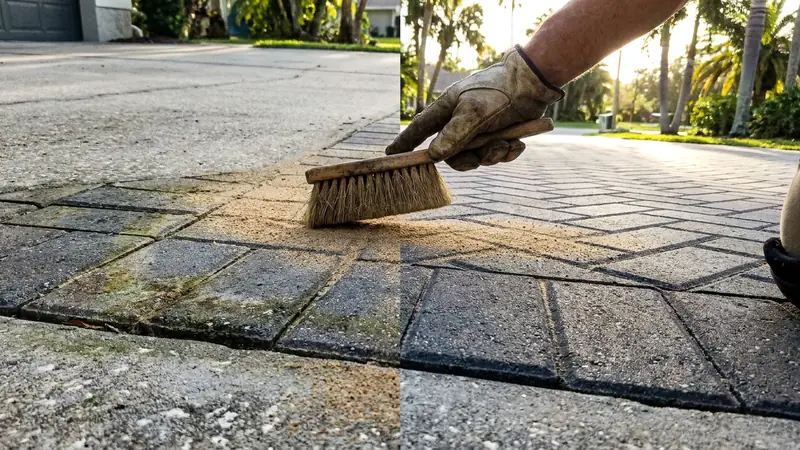
A stripper goes on in an even coat and sits for a set time. Journeyman HQ gives 15 to 30 minutes, until the film softens. Solvent-based coats need a stronger stripper, and water-based coats can use milder products. The softened sealer is scrubbed and rinsed away, and the pavers then dry fully before anything new goes down. A Brevard paver company describes the same order: chemical stripping, dwell time, a second pass if sealer re-adheres, then re-sanding. To hear which products a contractor uses, call (321) 275-3255.
Gloves, eye cover and care around plants and screens are part of this work. The rinse water has to go somewhere that will not harm a lawn, a pool or a neighbor's yard. Ask where it will drain when you request your free estimate.
What else gets fixed during a restoration?
Stripping and washing show what the old coat hid. Groundworks Pavers and Turf says settled pavers can be lifted, the base repaired and the same pavers set back, and that sealer cannot raise a low spot. Surfside Pressure Washing, a Brevard company, says worn joints and settling should be told apart from staining. So the visit sorts the problems before pricing them. To have the pavers walked, call (321) 275-3255.
Joint sand usually goes back in after the wash. Groundworks lists washed-out sand and well-water rust among the things that change sealing work, and says polymeric sand needs a 30 day wait before sealing over it. Standard sand and a short wait suit some jobs, and a longer wait suits others. Ask which one fits yours, then request your free estimate.
What does the restoration process look like step by step?
The process has six stages, and each one has to finish before the next begins. The slow parts are the dry-out and the cure. To get the dates that would apply to your driveway, call (321) 275-3255.
1. Walk and patch test
The contractor marks sunken areas, stains and failed film, and tries a stripper on a small patch to see how the old coat reacts.
2. Strip the old coat
Stripper goes on evenly, sits for its dwell time and is scrubbed and rinsed away.
3. Wash and treat stains
A pretreatment and wash lift algae and dirt. Rust, oil and white efflorescence get their own treatments.
4. Repair and re-sand
Low pavers are lifted and reset when needed, and joints are refilled with sand.
5. Dry and check
The pavers dry fully. A moisture check, such as taping plastic over a square, shows if water is still in the joints.
6. Reseal
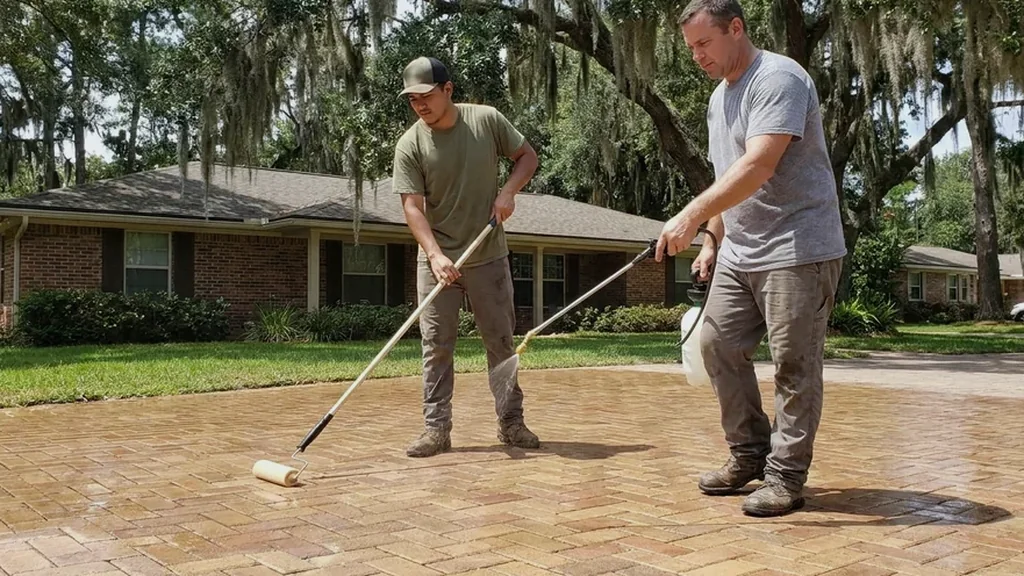
A pump sprayer lays down thin coats, and a roller removes pooled excess. A flood coat shows whether a second coat is needed.
What do 20 year old West Melbourne pavers go through?
Groundworks Pavers and Turf reads the Brevard tax roll as 8,257 single-family homes in the city, with a typical home built in 2004 and about 30 percent built before 2000. Pavers laid at those homes have had two decades of sun and summer rain. The city counted 4,874 housing units in 2000 and 11,448 in 2020, so a lot of the stock is younger, and Westbrooke, with 567 homes and a typical build year of 2001, sits near the old end. To ask about the pavers at your home, call (321) 275-3255.
A first coat may have been put on years ago by a builder or a prior owner, and the sealer type is often unknown. That is the reason for a patch test. West Melbourne receives 52.10 inches of rain a year, with 7.68 inches in August and 7.64 in September, which keeps the joints damp underneath. Share what you know about the install when you request your free estimate.
What does paver restoration cost in West Melbourne?
Brevard companies publish $1.85 to $4.00 a square foot to clean, sand and seal, and restoration starts from that number. Stripping an old coat usually costs extra, according to a Brevard paver company, and so does lifting and resetting sunken pavers. The size of the area, the type of old sealer and the number of new coats move the total. For a number written for your home, request your free estimate.
No published Brevard page gives a restoration rate, so the first table sets out the pieces that are published, and the second shows reference math. If a quote is far under the range, ask whether stripping is in it. Got a written quote already? Read it over with a contractor by calling (321) 275-3255.
| Piece of the work | What published pages say | Where it comes from |
|---|---|---|
| Wash, re-sand and reseal the pavers | $1.85 to $4.00 per square foot | A Brevard County sealing company, 7 steps from pretreat to a second coat |
| A lower starting rate for sealing | From $1.35 per square foot | A second Brevard paver company, listed as a starting price |
| Stripping the old coat first | Usually costs extra | The second company, no rate given |
| Lifting and resetting sunken pavers | Priced on its own | The second company describes the repair, no rate given |
| Restoration as a package | Quoted after a visit | Two Brevard companies list stripping or restoration, no rate given |
No published Brevard page gives a rate for restoration, so this table sets out the pieces that are published. A restoration quote is built from a visit.
| Paved area | Typical example | Wash, re-sand and seal only |
|---|---|---|
| 500 sq ft | Back patio and walk | $925 to $2,000 |
| 800 sq ft | Wide driveway | $1,480 to $3,200 |
| 1,300 sq ft | Driveway and entry | $2,405 to $5,200 |
| 1,800 sq ft | Driveway, deck and walks | $3,330 to $7,200 |
Reference math only. It multiplies the Brevard range by the area and leaves out stripping, leveling and extra sand, which are added once the contractor sees the pavers.
When is the right season for paver restoration in West Melbourne?
The pavers need a dry stretch more than a date on the calendar. West Melbourne gets 2.13 to 3.29 inches of rain a month from November through May, and 5.06 inches in October, against 6 to 7.7 inches from June through September. Brevard County's dry season runs December through May. Pick a time with clear days before and after the sealer step. To plan around the forecast, call (321) 275-3255.
Stripping and washing add wet days to the front of the job, so the whole project is longer than a plain coat. Sprinklers stay off while the pavers dry and the sealer cures. A contractor who watches the forecast moves the date rather than working into rain. To start picking a day, request your free estimate.
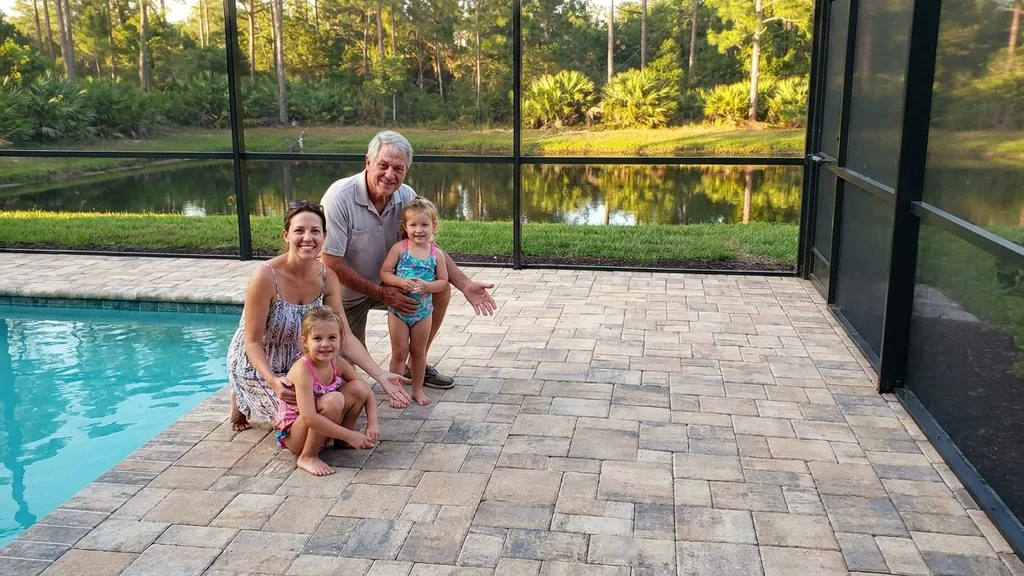
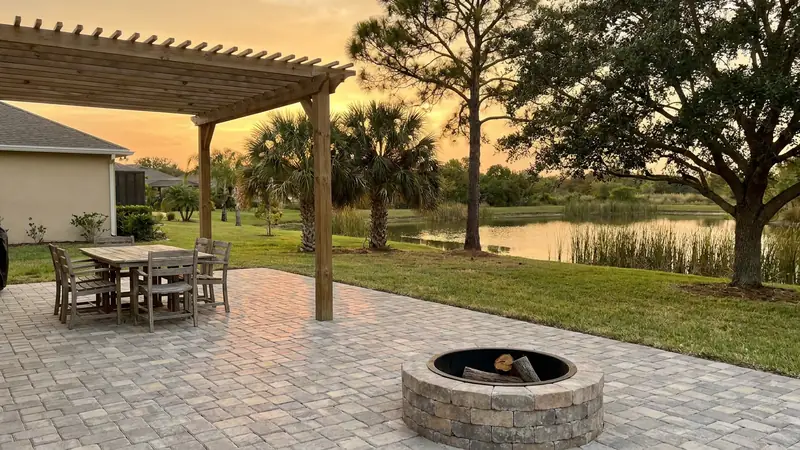
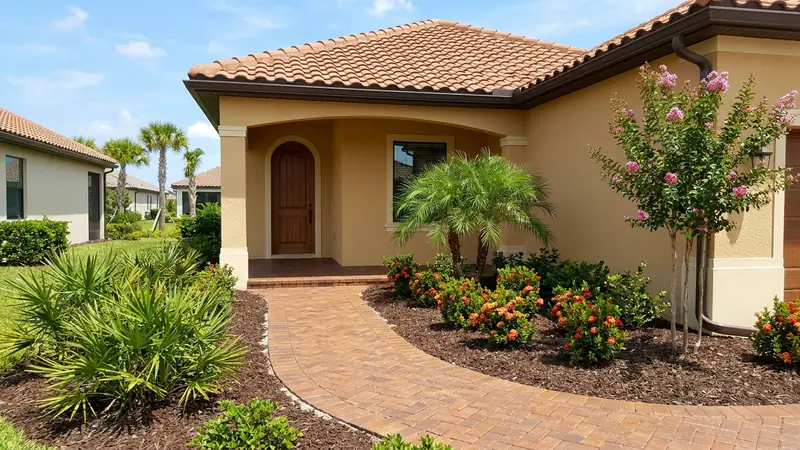
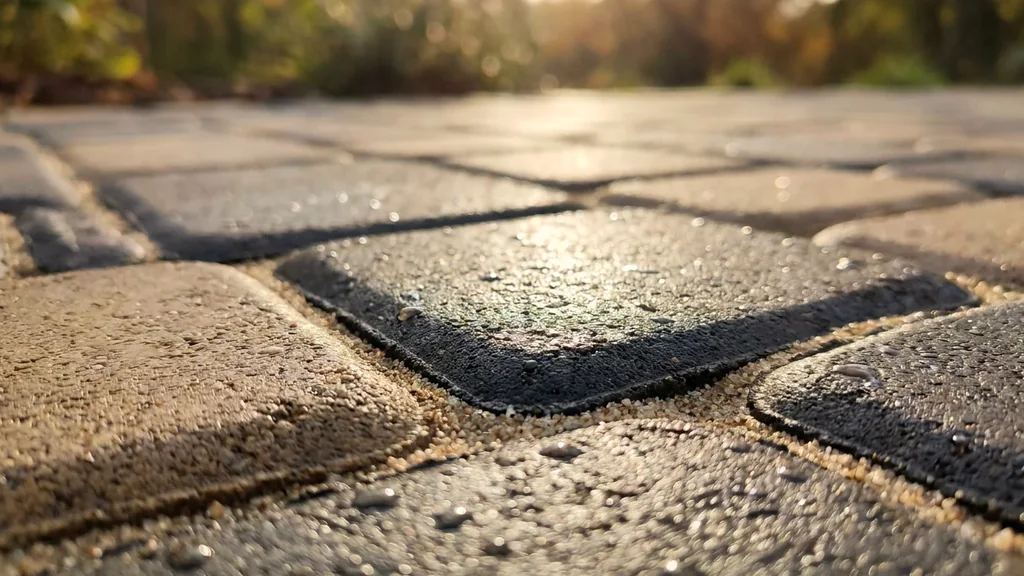
What do restored paver surfaces look like around West Melbourne?
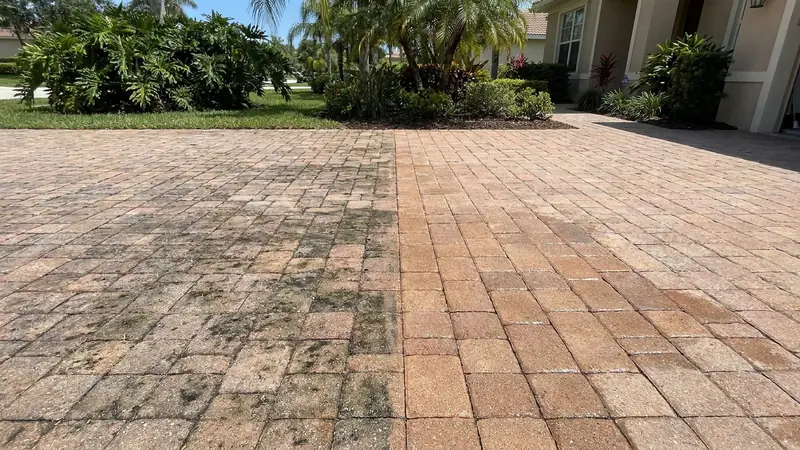
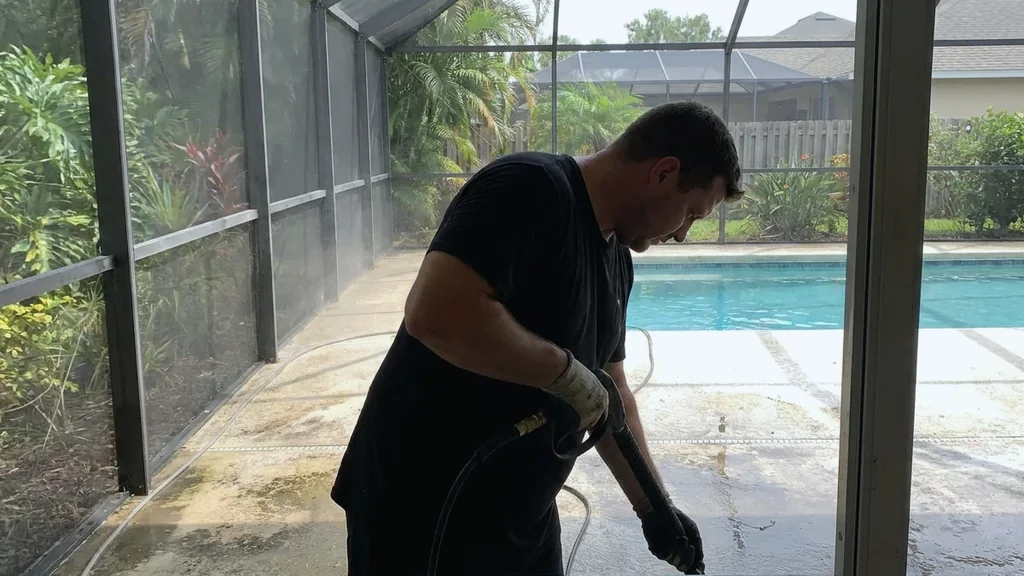
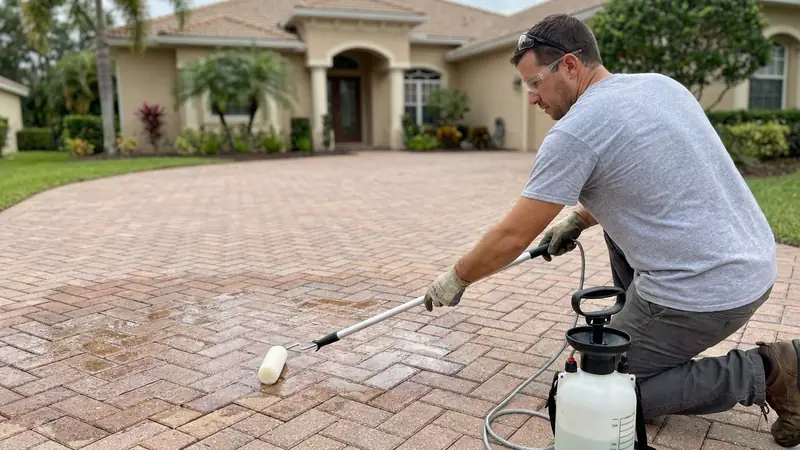
Which towns near West Melbourne can get paver restoration?
A free restoration estimate is open to West Melbourne homes and to each town in the list below, and every name opens a page of its own. A street that is missing from the list is still worth a call to (321) 275-3255.
What do West Melbourne homeowners ask about paver restoration?
Should you seal pavers after power washing?
Not before they dry all the way, and not over sealer that is already failing. A Brevard paver company says a bad coat may need chemical stripping and re-sanding first. Western Interlock, a paver maker, says hidden moisture in the joints is a common cause of cloudy sealer. A contractor decides after seeing the surface. To have yours looked at, request your free estimate.
What should I clean pavers with before sealing?
It depends on what is on them. Brevard companies describe a pretreatment, a scrub and rinse, and a separate treatment for white efflorescence, then another rinse. Old sealer is a different job, since a wash does not lift it. A contractor names the products used for each step, so ask for that list.
How much to clean and reseal pavers?
Brevard County companies publish $1.85 to $4.00 a square foot to clean, sand and seal. A 600 square foot driveway would land near $1,110 to $2,400. Stripping an old coat usually costs extra, and one Brevard company starts its sealing at $1.35. A figure for your own stone or pavers comes after a short look, so call (321) 275-3255.
What are the downsides of sealing pavers?
Sealing is a repeat cost, and a coat that goes on wrong has to be removed. Cloudy spots, a peeling film and a slippery gloss are the usual complaints. Most of them trace to moisture, heat or too much product at the time of the job. Restoration exists to clear those mistakes.
How do I know my sealer has failed?
Journeyman HQ, a paver care company, lists the signs: peeling or flaking, a white haze that will not wash off, yellowing, blotchy gloss, water soaking in instead of beading, a thick plastic-like build-up and mold growing under the film. One or two signs may only need a fresh coat. Several together point to stripping.
Can new sealer go over old sealer?
Sometimes. If the old coat is thin and still bonded, a fresh coat can go on after a wash. Peeling, hazy or yellowed film is different, since a new coat only locks the problem in. Western Interlock says a test patch shows what the old coat will take. To get a test done, request your free estimate.
Why did my sealer turn white?
Trapped moisture is the usual cause. Western Interlock says water hidden in the joints or bedding keeps sealer from bonding, and cloudy spots show up when the pavers get wet or the sprinklers hit them. A coat put down in strong heat or too thick can also go milky. Treating it starts with a patch test on a small area.
Does restoration include fixing sunken pavers?
It can, and it is priced on its own. A Brevard paver company says pavers can be lifted, the base repaired and the same pavers set back. Sealer and sand cannot raise a low spot. The contractor marks the sunken areas at the first visit.
Do I need new joint sand after stripping and washing?
Usually, since washing pulls sand out of the seams. A Brevard company lists re-sanding in its restoration work, and another says joint sand loss changes sealing work. A paver company also says to wait 30 days after polymeric sand before sealing over it. To ask which sand goes in, call (321) 275-3255.
Want a free paver restoration estimate?
Phone or use the short form, and a West Melbourne contractor writes back within 1 business day, usually much sooner.
Free, no obligation