
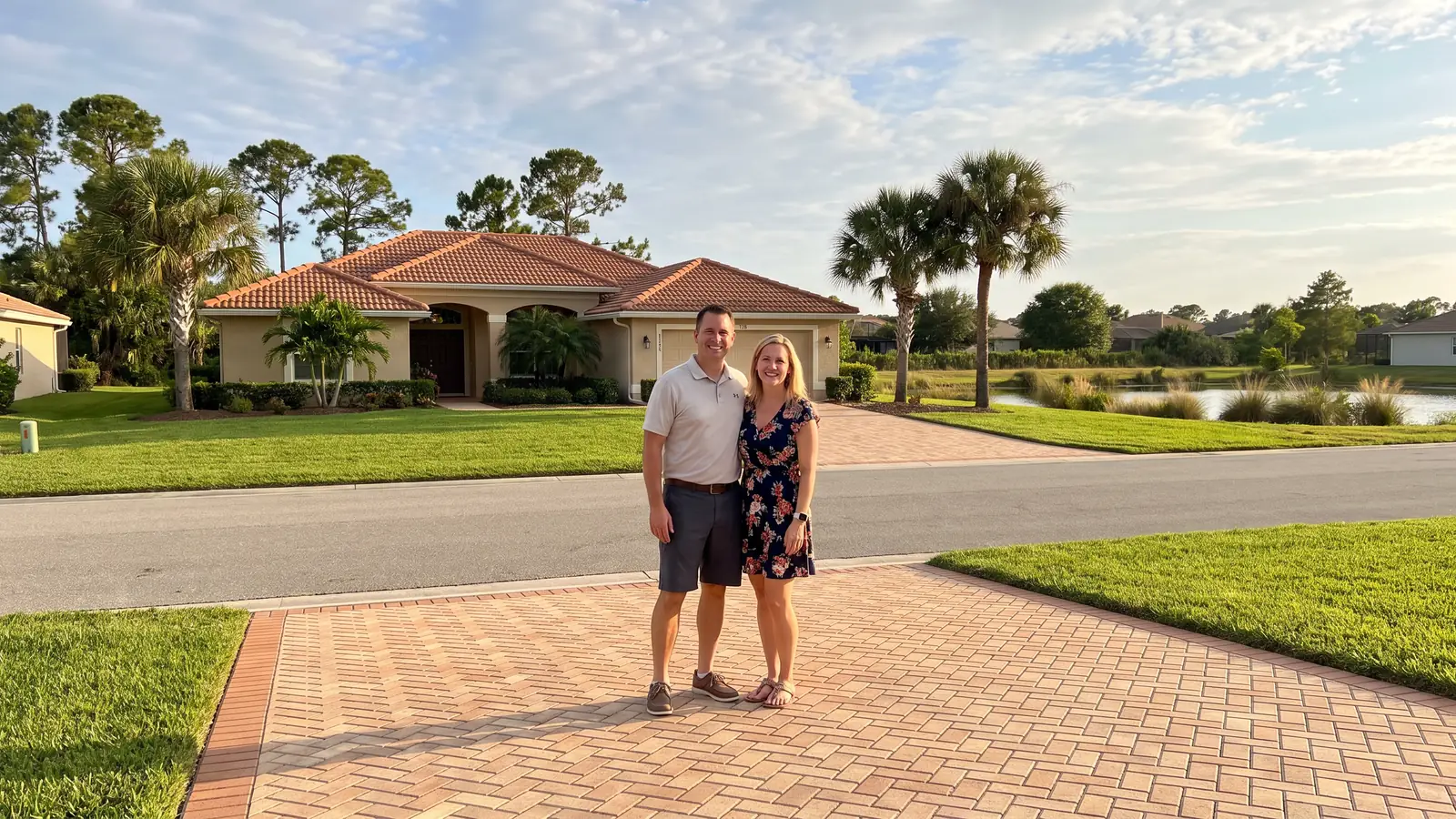
Richer color, full joints and a surface that rinses clean
Paver Sealing in West Melbourne, FL
Call (321) 275-3255 for a free paver sealing estimate at your West Melbourne home.
- Brings out deeper paver color
- Fresh joint sand helps lock pavers in place
- Gives weeds less room to grow
- Makes the surface easier to keep clean
- Free estimate, no obligation
Request a Free Estimate
Free, no obligation.
Who can seal pavers at my West Melbourne home?
A local contractor can seal pavers at your West Melbourne, FL home, and you will hear back within 1 business day, usually much sooner. The estimate is free, and booking is up to you. To begin, call (321) 275-3255.
Sealing deepens paver color, keeps joint sand in place and makes dirt and algae easier to rinse off. Picture a driveway after a wet summer, pale at the edges with sand missing from the seams. After a wash, fresh sand and a coat, it turns dark and even again. Driveways take tires and oil, while pool decks take splashes and bare feet, so each area gets its own plan. When you request your free estimate, describe how each area gets used.
Paver Sealing West Melbourne Is Proud to Serve the Space Coast
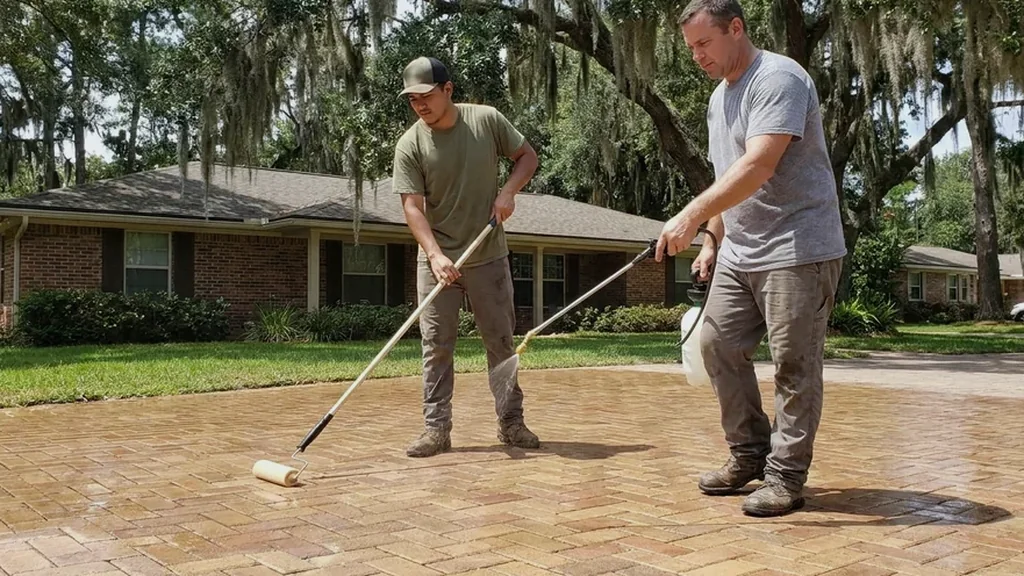
What is included when pavers are sealed in West Melbourne?
Four steps make up a full job: look, wash, sand and seal. The wash and the drying take the most time. To talk through the steps for your home, call (321) 275-3255.
Walk-through
The contractor measures the area and writes down low spots, loose pavers, leftover sealer and any place water collects.
Wash and stain treatment
Algae, rust and dirt come off with a cleaner and a surface cleaner, and efflorescence gets its own treatment.
Joint sand
Sand fills every seam so the pavers lock together and weeds have less room.
Sealer coat
The product goes on fully dry pavers in thin, even coats at the rate on its label.
How can I tell my pavers need sealing?
Look for faded color, joints that sit below the paver edges, sand spread across the driveway after a storm and water that soaks in instead of beading. A Brevard sealing company lists fading, visible wear and water not beading as the signs. Adding sand early is cheaper than resetting pavers once they shift. For a quick opinion, call (321) 275-3255.
Which paver sealer holds up in West Melbourne heat and rain?
Each home calls for its own product, so ask which sealer is planned and what it does well. A Brevard sealing company describes two families: film-forming sealers that sit on the surface and add gloss, and penetrating sealers that soak in. It puts film-forming coats at two to three years and penetrating coats at up to five. To compare them for your pavers, call (321) 275-3255.
Unilock, a paver maker, notes that water-based products allow deep penetration on porous concrete and that solvent types evaporate faster. Installers here also disagree on joint sand. One Brevard company uses standard sand and never polymeric under a sealer, while another follows the 30 day wait that manufacturers set for polymeric. To find out which product goes where, request your free estimate.
Wet look or natural finish: which suits my pavers?
Choose a wet look for deeper color with some shine, or a natural matte finish to stay close to how the pavers looked new. Around a pool, footing matters more than shine, and Unilock says high gloss can be slippery when wet. Ask to see a sample of each on a spare paver. To set that up, request your free estimate.
How often should pavers be resealed in West Melbourne?
Plan on every two to three years. A Brevard sealing company recommends that span for local homes and says to watch for fading and water that stops beading. The same company says busy driveways and pool decks may need a coat every one to two years, while a quiet patio can go up to five. How much sun and traffic the area gets sets your own timing. To have your coat checked, call (321) 275-3255.
Does more sealer mean more protection?
No. A heavier coat does not last longer. Unilock links stacked layers to uneven gloss and says a second coat laid before the first one sets can leave a whitish film. A Brevard company adds that thin coats avoid puddling, which shortens the life of a coat. Western Interlock says highly absorbent pavers can need two coats, so the number should come from the pavers, not a sales pitch. Ask why before you request your free estimate.
When is the right time of year to seal pavers in West Melbourne?
The forecast matters more than the calendar, though the weather does follow a pattern. West Melbourne gets about 2 to 3.3 inches of rain a month from November through May and 6 to 7.7 inches from June through September. A dry stretch in the first group gives a coat room to cure. If your pavers are new, give the install date when you phone (321) 275-3255.
Unilock wants clear skies for 24 to 48 hours ahead of the job. It then asks for dry weather for as long as 48 hours afterward, with temperatures from 50 to 90 degrees. Western Interlock adds that a paver surface above 90 degrees can ruin the bond. A driveway in July sun passes that mark well before the air does. The sprinklers stay off while the coat cures. To fit a day to the forecast, request your free estimate.
Can sealing fix pavers that have sunk or spread apart?
No, sealer cannot lift a sunken paver or close a wide joint. Pavers that rock under a car or hold a puddle after rain need their base repaired first, and joint sand only holds once they sit level again. Find out if leveling is included or priced separately.
Which areas around a West Melbourne home can be sealed?
A coat can go on driveways, screened pool decks, patios and entry walks. Every surface wears in its own way, so each gets its own plan. Start with the spot that bothers you most, and request your free estimate.
Driveways
Tires, oil drips and long hours of sun all land on a driveway. Sealing a driveway should leave the color even and the joints full under a parked car.
Screened pool decks
Splashes, pool water and bare feet wear on a deck every day. Sealing a deck should leave it with grip, not slick underfoot.
Back patios and lanais
A patio in shade, or one beside a sprinkler zone, stays damp longer, so algae gets an early start. Sealing a patio puts the focus on those green spots and on slowing their return.
Walkways and entries
Entry walks are narrow and sit next to mulch, soil and sprinkler spray. Sealing an entry walk is a small job that every visitor notices.
What paver problems are common in West Melbourne?
Five problems come up often here. They are summer fading, sand loss in the rainy months, orange sprinkler spots, green growth on damp edges and white haze on newer pavers. Each costs less to handle early. Not sure which apply to you? Call (321) 275-3255.
1. Fading in the summer sun
Highs average 91 degrees in July and August, and an open driveway takes that all day. A Brevard sealing company says harsh sun can dry sealer out until it turns brittle. Sealing slows that fading.
2. Sand loss in the rainy months
June through September bring roughly 6 to 7.7 inches of rain a month, enough to carry sand out of the seams. Once joints run low, pavers can shift and weeds move in, so sand goes back before any coat.
3. Orange spots from sprinklers
UF/IFAS says most Florida well water is high in iron and leaves rust on whatever it touches. A Brevard washing company adds that sprinkler water is behind many rust stains on local driveways. Rust has to come off first.
4. Green and black growth on damp edges
A Brevard exterior cleaning company says Florida humidity grows mold and algae quickly, and it suggests washing a home's exterior at least once a year. Shaded corners and sprinkler edges stay wet the longest.
5. White haze on newer pavers
The city counted 4,874 housing units in 2000 and 11,448 in 2020, so newer homes are common. Unilock says the white haze on new pavers, called efflorescence, can take 2 to 3 months or up to a year to fade.
What does paver sealing cost in West Melbourne?
Expect about $1.85 to $4.00 per square foot to clean, sand and seal, the range Brevard County companies publish. Size sets most of the price. A Brevard exterior cleaning company also lists paver condition, paver type and the number of coats, since concrete, clay and natural stone absorb sealer differently. For a number written for your home, request your free estimate.
Repairs, leveling and stripping failed sealer usually cost extra. When a quote lands far below the range, ask which prep steps it includes. To check a quote you already have against these figures, call (321) 275-3255.
Looking for just a wash? The cleaning guide covers that. The service areas page lists every town, and the home page has the overview.
| Paved area | Typical example | Clean, sand and seal |
|---|---|---|
| 300 sq ft | Small patio or walkway | $555 to $1,200 |
| 600 sq ft | Two car driveway | $1,110 to $2,400 |
| 1,000 sq ft | Large driveway or pool deck | $1,850 to $4,000 |
| 1,500 sq ft | Driveway plus pool deck | $2,775 to $6,000 |
Math based on the $1.85 to $4.00 per square foot that Space Coast paver companies publish. Your contractor sets the actual price after seeing the surface. Repairs, leveling and stripping failed sealer are usually extra.
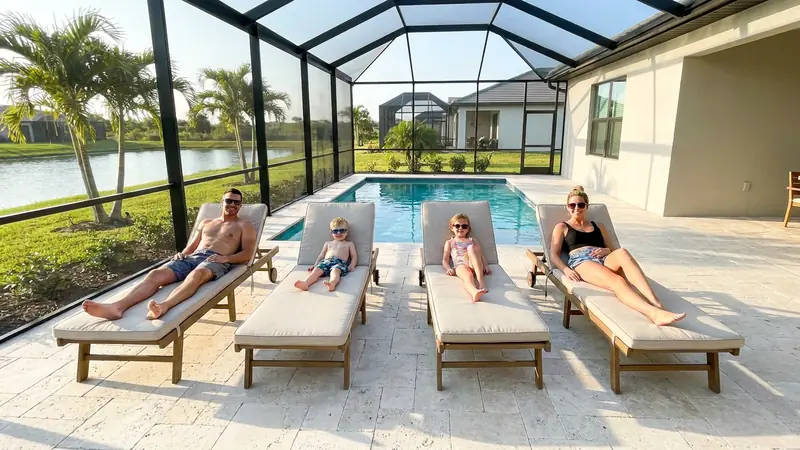
Why hire a local contractor for paver sealing?
A contractor who works around West Melbourne already plans for summer heat, rainy months and sprinkler rust. The price still arrives in writing, and the decision stays with you. To begin, call (321) 275-3255.
Contractors near West Melbourne
A local contractor who works around New Haven Avenue and the streets beside it sees the same sun and storms your pavers do. That makes the first visit more useful.
Free estimate, your decision
Looking at your pavers and quoting the job is free. If the price is not right for you, you can pass.
Brevard prices to check against
Companies on the Space Coast publish $1.85 to $4.00 per square foot for the full job, and this site shows that range. If a quote lands far outside that range, ask why.
Your timeline
Request the price in writing, then decide at your own pace. Before you sign, the contractor standards page shows what to check.
Ready for a free paver sealing estimate in West Melbourne?
Phone or use the short form, and a West Melbourne contractor answers within 1 business day, usually much sooner.
Free, no obligation
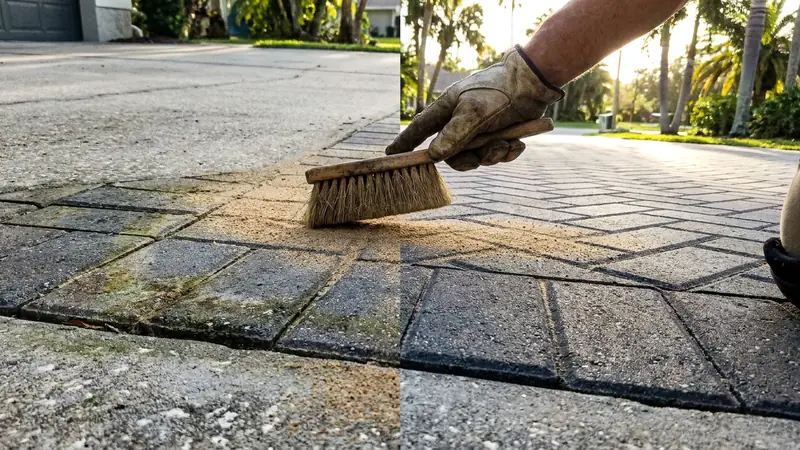
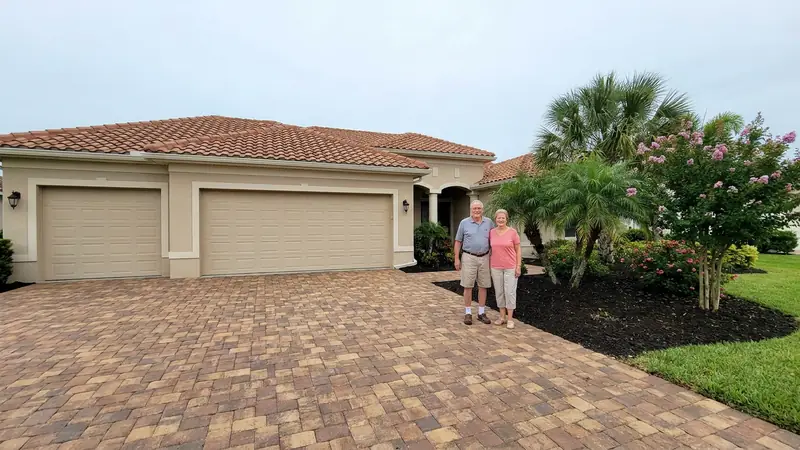
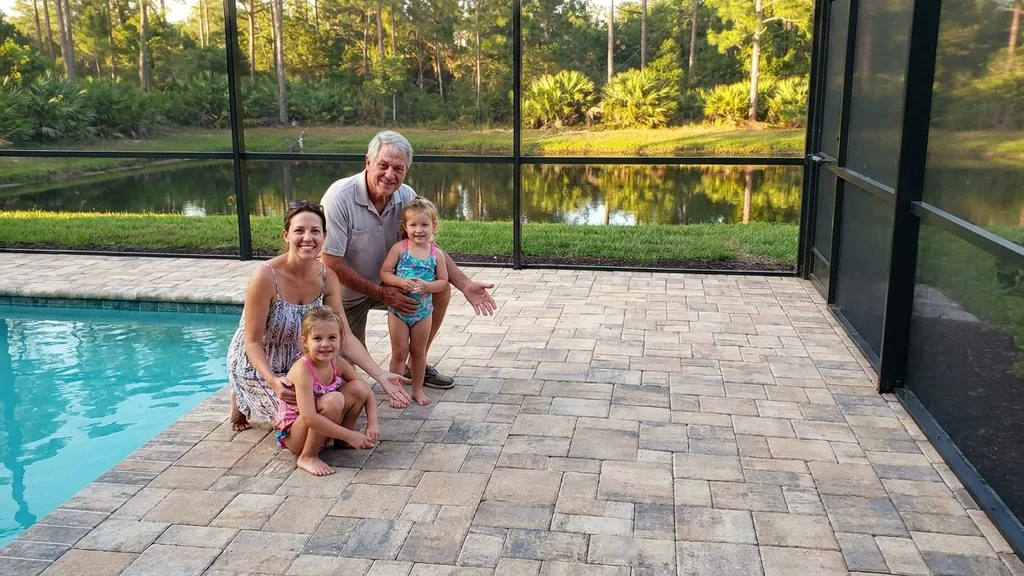
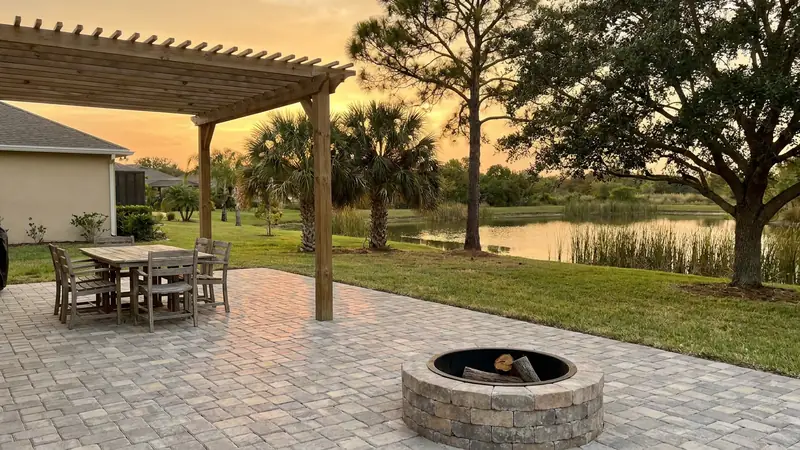
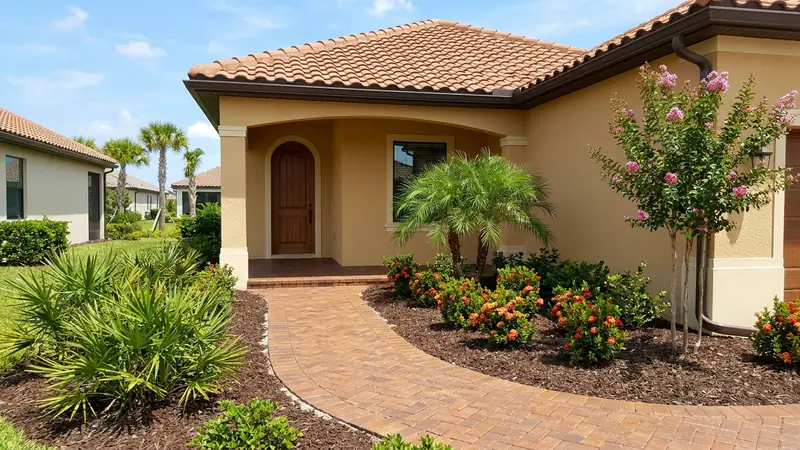
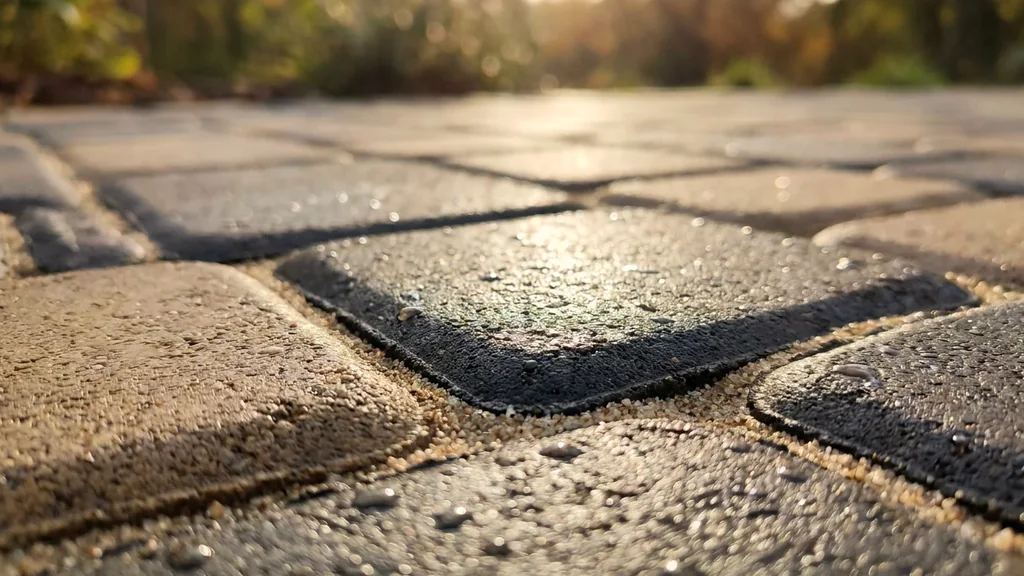
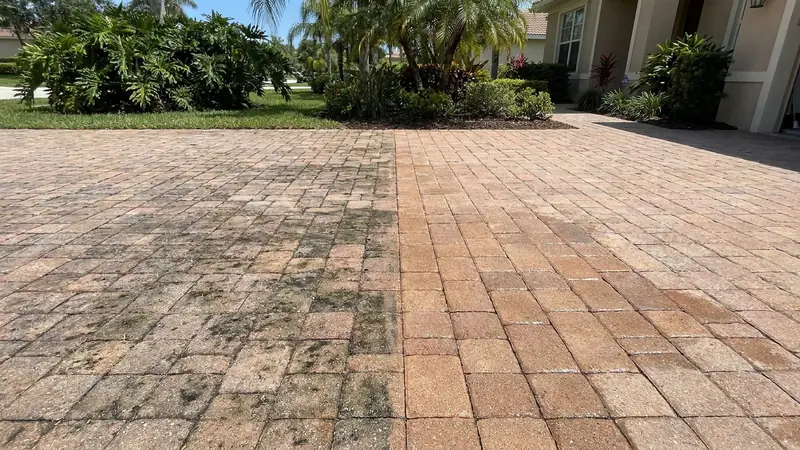
How do West Melbourne pavers look after a fresh seal?
How does the paver sealing process work from start to finish?
Every job runs through five steps, beginning with a look and ending with a walk-through. If you are ready to schedule, call (321) 275-3255.
1. Walk the pavers and measure
Measuring comes first, so the sealing quote rests on real square footage. Dips, loose pavers, old sealer, stains and any spot where water sits all get noted.
2. Pretreat and wash
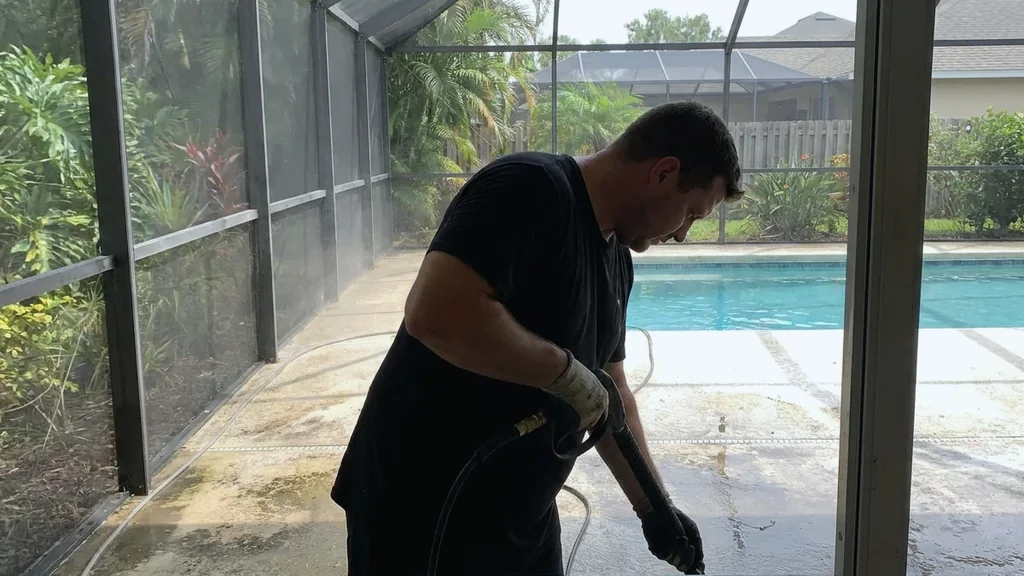
A cleaning solution goes on first to loosen algae and dirt. A rotary surface cleaner then washes the pavers in sections at a pressure that leaves the joint sand in place.
3. Treat stains and haze
Rust, oil and efflorescence each get a treatment made for that problem, tried on a small spot first. A second rinse clears the residue.
4. Dry and refill the joints
The pavers dry all the way through, which Unilock puts at a few hours in sun and about a day in shade. Joint sand is then swept in, settled and topped off.
5. Seal and walk it with you
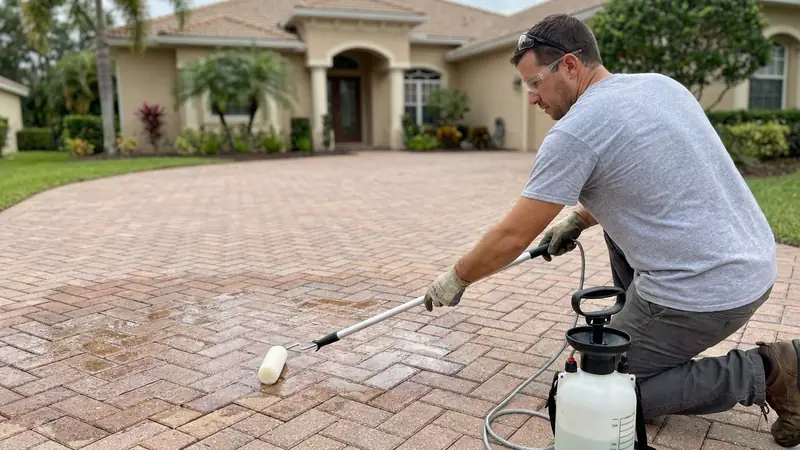
When sealer is part of the job, a pump sprayer lays it down in thin coats and a roller smooths any pooling. The contractor then explains how long to keep feet and cars off.
Frequently Asked Questions
How often should you reseal pavers in Florida?
Plan on every two to three years in this part of Florida. Two Brevard sealing companies give that span, and one says to reseal sooner when color fades or water stops beading. Unilock, a paver maker, puts it at three to five years where sealing is optional. Sun and traffic move the number. To have yours checked, call (321) 275-3255.
What is the average cost to seal pavers in Florida?
Space Coast companies post $1.85 to $4.00 a square foot for the whole clean, sand and seal job. A 600 square foot driveway lands near $1,110 to $2,400. Prices in other parts of Florida can differ, which is why this is the Space Coast figure. Work such as repairs or stripping failed sealer is usually priced on its own.
Is it better to spray or roll paver sealer?
Both have a job. Western Interlock, a paver company, says a sprayer lays product down evenly and a roller or squeegee then removes any pooled excess. Unilock agrees and suggests a dry roller to soak up extra. Ask which method a contractor plans to use on your surface.
What are the downsides of sealing pavers?
Sealing is a repeat cost, since Unilock puts reapplication at every 3 to 5 years. High gloss can also be slippery when wet, and a new coat has to be compatible with an old one. A matte finish avoids the slick surface, and a small test patch settles the compatibility question.
What do professionals use to seal pavers?
Contractors commonly use a sprayer and a roller with a water-based or solvent-based sealer. Sealers come as film-forming types that sit on the surface or penetrating types that soak in. A Brevard sealing company says film-forming coats last about two to three years and penetrating ones up to five.
When is a good time of year to seal pavers in West Melbourne?
Pick a dry stretch. From November through May the city averages about 2 to 3.3 inches of rain a month, against 6 to 7.7 inches from June through September. Unilock asks for 24 to 48 hours of clear weather before sealing. Western Interlock says a surface above 90 degrees can ruin a coat, so summer jobs favor early hours. To pick a date, request your free estimate.
Do pavers on a newer West Melbourne home need sealing right away?
Not right away. A white haze called efflorescence can appear on new pavers. Unilock says to wait until it clears, usually 2 to 3 months and sometimes up to a year. A Brevard sealing company suggests at least 60 to 90 days. If polymeric sand went in, another Brevard company says manufacturers set a 30 day wait before sealing. To plan the timing, call (321) 275-3255.
Can pavers around a pool in West Melbourne be sealed?
Yes. A pool deck gets splashes and bare feet, so choose the finish for traction first. Unilock says high gloss can be slippery when wet and calls a matte sealer the safer option. Ask whether a grip additive is available for the product being used.
What if rain hits before the sealer cures?
Rain on a fresh coat can leave white marks or cloudy spots. Unilock calls for as much as 48 dry hours once the coat is down. A good contractor checks the forecast days ahead and moves the date instead of working into rain.
Book a Look at Your Pavers Before the Next Rainy Season
A quick call or form starts a free sealing estimate, and a West Melbourne contractor replies within 1 business day, usually much sooner.
Free, no obligation