
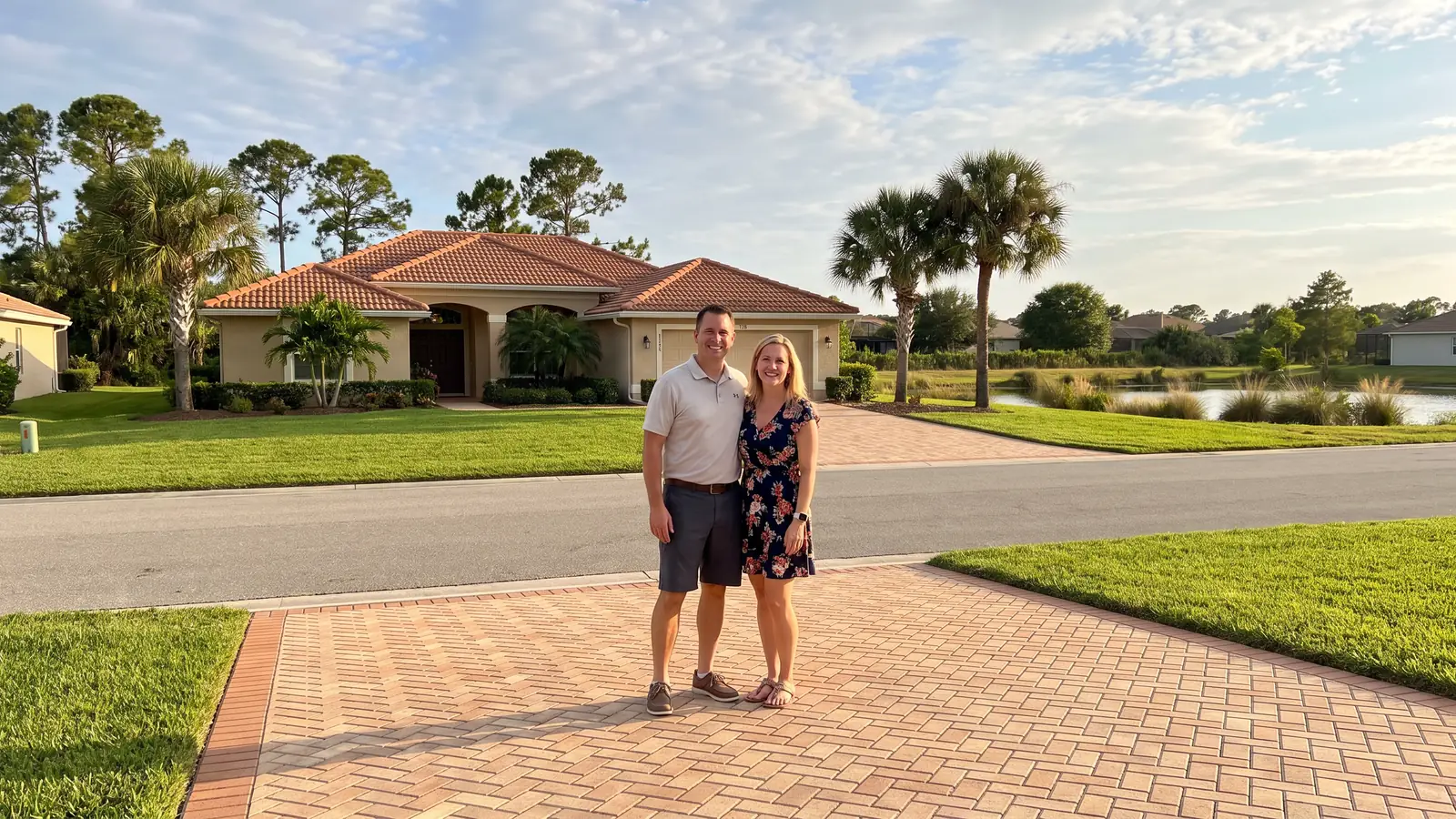
Paver sealing for Downtown Melbourne homes
Paver Sealing in Downtown Melbourne, FL
Pavers near East New Haven Avenue in Downtown Melbourne can look fresh again, so call (321) 275-3255 for a free estimate.
- Brings out deeper paver color
- Fresh joint sand helps lock pavers in place
- Gives weeds less room to grow
- Makes the surface easier to keep clean
- Free estimate, no obligation
Request a Free Estimate
Free, no obligation.
Fast, careful paver sealing in Downtown Melbourne
Paver sealing in Downtown Melbourne is one phone call away, and the estimate is free. A local contractor cleans, re-sands and seals driveways, walkways, courtyards and pool decks around East New Haven Avenue and the streets beside it. To request your free estimate for Downtown Melbourne, send a few details, and a reply arrives within 1 business day, usually much sooner.
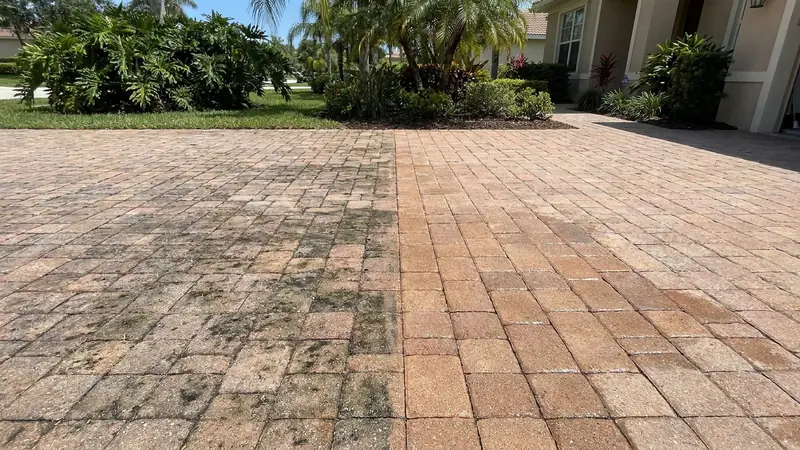
Picture the walk to your front door. The joints hold green fuzz and bare patches, and the color has gone a flat gray. After a wash, fresh sand and a new coat, the same pavers read as one even tone again. If you want to hear it explained out loud, call (321) 275-3255 and describe what you see.
Why hire a local paver sealing contractor in Downtown Melbourne?
Downtown Melbourne sits on sandy ground not far from the lagoon, and its older lots hold surprises that a local contractor has met before. To hear how that applies on your block, request your free estimate.
A free look at your pavers
The contractor visits your Downtown Melbourne property, measures the pavers and names a price before you agree to anything.
A published price range
Local companies post $1.85 to $4.00 per square foot for the whole clean, sand and seal. Hold any bid up against it.
A finish that suits an older house
Matte stays quiet beside a frame bungalow or old brick. A wet look adds shine but shows scuffs sooner.
You make the call
You pick the date, the finish and whether to go ahead. There is no obligation on a Downtown Melbourne estimate.
Get Your Free Estimate in Downtown Melbourne
Tell us about your pavers in Downtown Melbourne.
Free, no obligation
What paver problems show up most in Downtown Melbourne?
Sandy ground under a downtown driveway
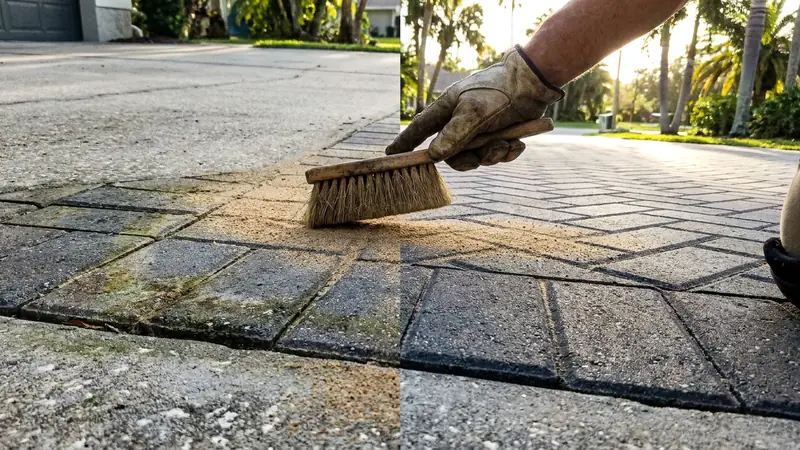
A historic marker on Front Street says the fire engine bogged down in sand during the 1919 fire that took the old waterfront stores. That story fits the ground you still stand on in Downtown Melbourne. Loose sand drains fast and shifts in hard rain, so joint sand washes out and the gaps widen. Wider gaps let weeds and ants in, which means the joints need fresh sand before any sealer goes down. Ask the contractor to show you the joints after the wash, while they are still open and easy to see.
Rain that arrives in a rush
NWS Melbourne studied 22 years of rainfall from a north Melbourne gauge. About 64 percent of the rain fell in 38 percent of the year, in a wet season of roughly 138 days. For a Downtown Melbourne patio, that means weeks of damp mornings where algae settles in the shade. Sealer needs a dry surface, so the job waits for a real dry spell. Shade makes it worse, since a hedge or a big oak keeps one corner damp for days. That is a normal delay in a Downtown Melbourne summer, not a sign that anything is wrong.
Runoff headed for the lagoon
Wikipedia notes that about 80 percent of Melbourne's land drains toward the Indian River Lagoon. Where water leaves a driveway slowly, it can leave a film of dirt behind after each storm. Sealer would lock that film in place. The wash has to come first, and the low end of the drive gets the most attention. If the dirt film has sat for years, it may take a second pass to clear, and that is worth knowing before the quote. Mention any spot where water stands after a storm, because the contractor will want to see it in person.
A coat from an earlier owner
Some houses in Downtown Melbourne date to the early 1900s, and pavers around an older house were usually added long after it was built. One owner may have used a solvent-based sealer and the next a water-based one. Water-based sealer will not hold on a solvent-based coat. The contractor checks what is on the surface first, and a peeling or cloudy patch is a clue. If you find an old receipt or a product name in the garage, keep it for the visit.
Rust marks from sprinkler water
University of Florida extension notes that irrigating with iron-rich well water can leave orange streaks on walls and walks. Most Melbourne water customers get treated surface water from Lake Washington. If your sprinklers run off a private well instead, look for rust lines where the spray lands. Rust has to come out before sealing, since sealer would trap it. Pointing the spray heads away from the pavers keeps new marks from forming.
Do paver jobs differ between the historic blocks and the newer streets of Downtown Melbourne?
Yes, because Downtown Melbourne mixes century-old buildings with newer driveways and courtyards. The Myles Building, erected in 1913, and the Henegar Center, which opened as a school in 1920, both stand along East New Haven Avenue. Pavers beside old brick need gentle rinse water, so tell the contractor what your walls are made of when you request your free estimate. That one detail tells the contractor whether to plan for old brick, newer pavers or both.
Houses of the early 1900s here were often frame vernacular, like the Nannie Lee House from 1905 at 1218 East New Haven Avenue. Wood siding and old window sills sit close to many walkways. Call (321) 275-3255 and say what your house is built from, so the rinse can be planned around it. Sills and trim take splashes first, so they get covered or rinsed with care.
Downtown Melbourne and most of the city lie inland of the Indian River Lagoon. Only a small part of Melbourne sits out on the barrier island. A few blocks from the water, rain and shade still do their work on pavers. If your lot sits on the higher ground above the old Front Street waterfront, request your free estimate and mention it.
What does paver sealing cost in Downtown Melbourne?
Space Coast companies commonly publish $1.85 to $4.00 per square foot for cleaning, sanding and sealing. A Downtown Melbourne quote should land inside that range. Heavy green growth, thin joint sand and an old coat push a job toward the top. A small courtyard and a long drive cost the same per foot but differ in total, so request your free estimate for your own number.
Access plays a part too. A narrow side yard or a back patio behind a gate means gear gets carried in by hand. Rain days can also move a Downtown Melbourne schedule, so ask what happens to the price if a date slips. Call (321) 275-3255 to learn which of these apply to your property before any work begins.
| Paved area | Typical example | Clean, sand and seal |
|---|---|---|
| 300 sq ft | Small patio or walkway | $555 to $1,200 |
| 600 sq ft | Two car driveway | $1,110 to $2,400 |
| 1,000 sq ft | Large driveway or pool deck | $1,850 to $4,000 |
| 1,500 sq ft | Driveway plus pool deck | $2,775 to $6,000 |
Math based on the $1.85 to $4.00 per square foot that Space Coast paver companies publish. Your contractor sets the actual price after seeing the surface. Repairs, leveling and stripping failed sealer are usually extra.
How does a paver sealing job work in Downtown Melbourne?
Walk the property and read the old coat
The contractor starts by looking at how your Downtown Melbourne pavers drain and where shade or sprinklers keep them wet. Sunken or loose spots are marked, because a coat of sealer would lock in a dip. If a coat is already on the surface, the contractor works out what it is. A water-based product cannot be laid over a solvent-based coat, so this step comes before any product is chosen. You will also hear what the contractor plans to do about edges, steps and any spot where pavers meet concrete.
Wash off the grime and green growth
Cleaning removes algae, dirt film, rust marks and loose sealer. Rinse water is kept off wood siding, window sills and old brick wherever the pavers meet the building. Pool decks and screened lanais get the same care around the cage frame. Low spots near the street get extra attention, since runoff leaves dirt there. Pavers around an older home call for a gentle hand. Point out any stain from a car, a grill or a planter at the start, so it does not surprise you later.
Refill the joints with sand
A wash pulls sand from the joints, and the contractor refills them before any coat. Sandy ground like downtown Melbourne's lets joints open up fast, and open joints invite weeds and ants. Each joint is topped off, then the surface gets swept. If the sand has been thin for a long time, this step takes longer, and the contractor may add a second fill. The contractor sweeps the surface afterward, so loose grains do not end up under the coat.
Wait for a dry surface
Sealer needs a dry surface, and Melbourne's rain is packed into a wet season that runs from late May through October. A shaded patio near a hedge or an oak can take longer to dry than a sunny drive. The contractor reads the forecast and holds off rather than sealing a damp surface. Ask for sprinklers near the pavers to be turned off during the job. Waiting a day is common and is no sign of trouble.
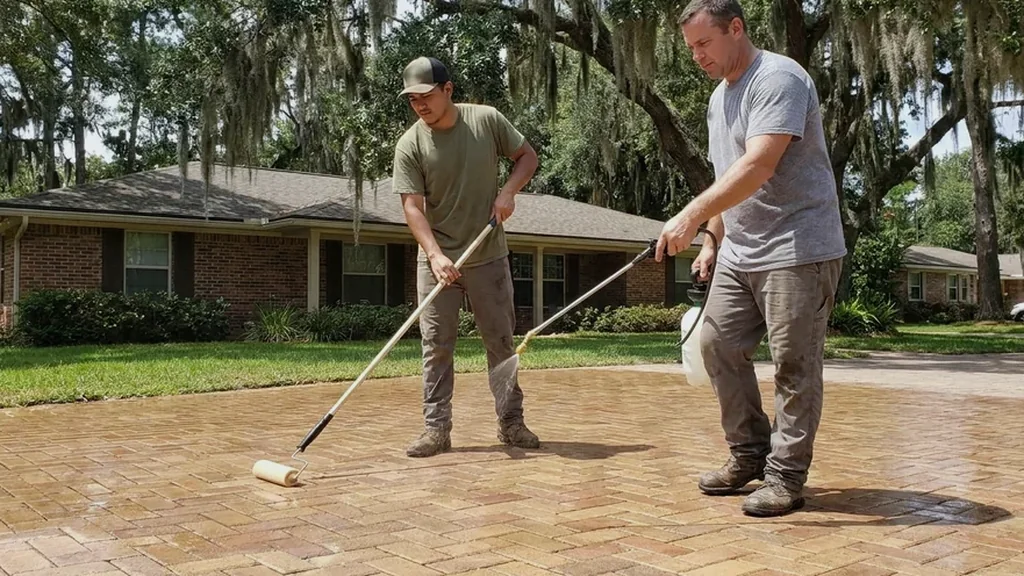
Apply the finish you chose
Now the sealer goes on in the finish you picked, matte or wet look. Scuffs show sooner on a wet look than on matte, which counts on a driveway used every day. Local quotes run two to five years between coats, with Brevard companies often saying two to three. Ask about staying off the pavers, since one Brevard company says full cure takes 48 hours. Keep pets, bikes and trash cans off the surface until you hear the all-clear.
Complete paver services in Downtown Melbourne
A Downtown Melbourne job follows a set order: wash, re-sand, dry, then seal. The wash lifts green film and dirt, and fresh sand goes into every joint after it. Sealer goes down last, so nothing dirty is trapped under it, and the surface can dry between steps. To find out how long each stage takes on your lot, call (321) 275-3255.
Driveways take tires and street runoff. Front walks and courtyards beside older brick or wood need more care with rinse water and a gentler touch at the edges. Pool decks and lanai pavers add chlorine splash and bare feet. Tell the contractor which surfaces you have when you request your free estimate, and the plan can fit each one.
Sealer comes in water-based and solvent-based types, in a matte or wet look. A water-based product cannot go over a solvent-based coat, so an old coat can decide the choice. On a block of frame bungalows or old brick, matte keeps pavers from outshining the buildings. Call (321) 275-3255 to talk through the finish that suits your property.
Melbourne gets about 51 inches of rain a year, most of it from late May to October, so a sealing date can slide. A shady patio may stay damp long after a sunny driveway dries. One Brevard company says September through May brings lower humidity and less rain. To find a date that works on your block, request your free estimate.
Questions to ask before you hire
- Is the finish glossy or matte, and can I see a sample on a spare paver first?
- Do you add a non-slip grip additive on pool decks?
- How is the price figured, by the square foot or by the job, and what could change it once you see the pavers?
- Can you seal in sections so I can still use part of the driveway during the job?
- Will you rinse off the salt film before sealing if my home is near the water?
- What happens if an afternoon storm rolls in before the sealer cures?
- Can you treat the rust stains from my sprinklers before you seal?
What do sealed pavers look like around Downtown Melbourne?
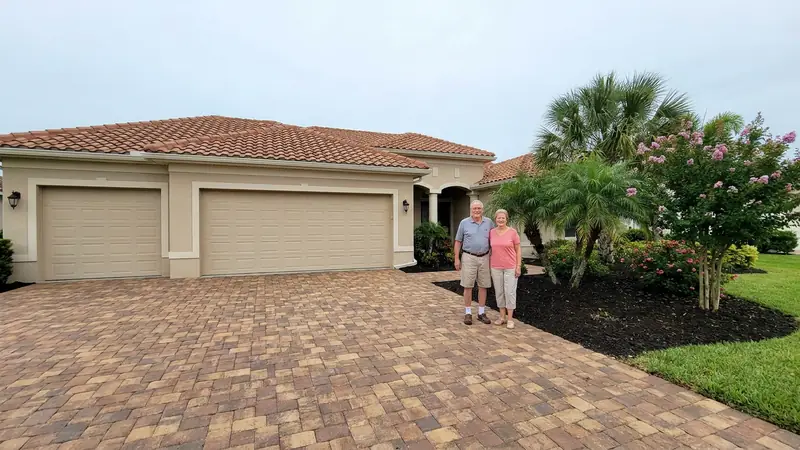
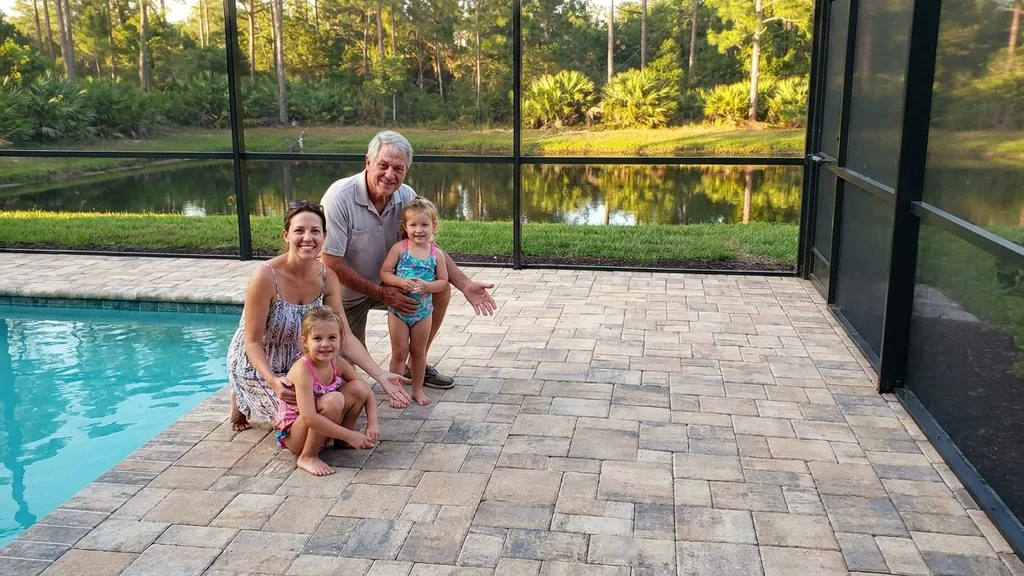
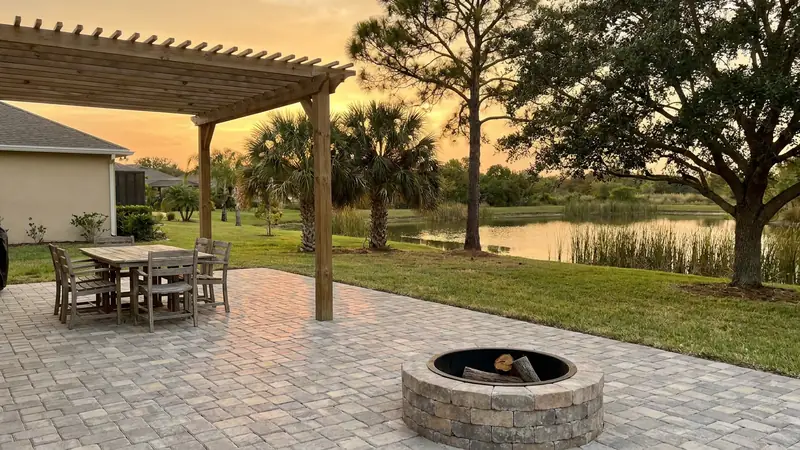
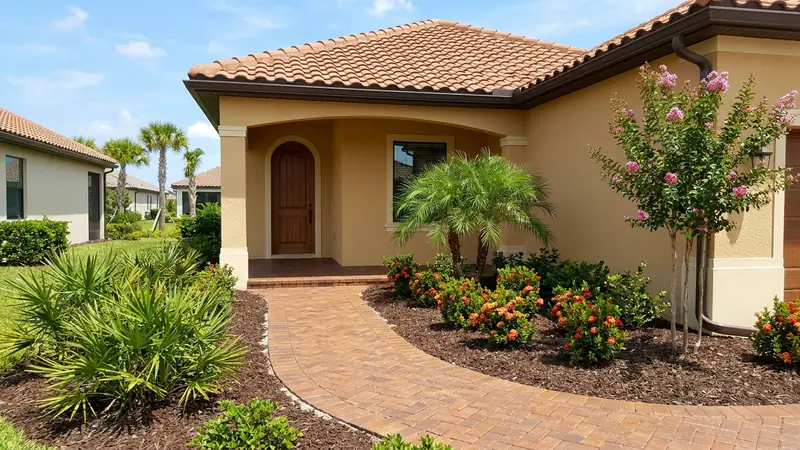
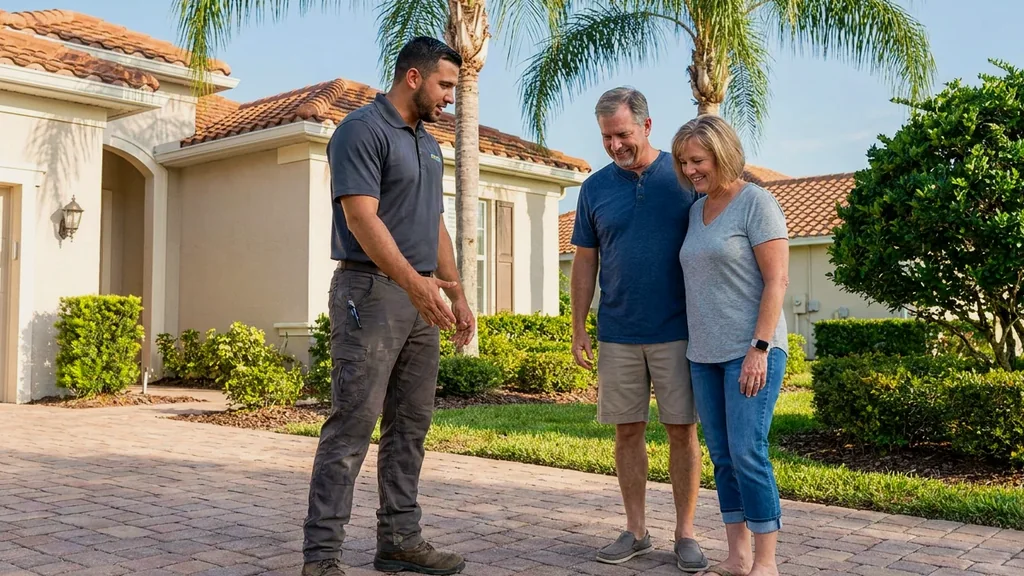
Why local matters in Downtown Melbourne
A contractor who works Downtown Melbourne knows the ground here is sand and the lots are often old. That shapes how much sand goes back in the joints and how gently the wash is done. A contractor from another county might never ask about the soil. To reach a contractor who works near New Haven Avenue, call (321) 275-3255.
Local knowledge helps with timing too. Rain here arrives in a rush, with most of it in a wet season about 138 days long, so a good contractor watches the forecast. A job on the lagoon side of town may also meet damp mornings. You can request your free estimate and ask how the schedule would handle a wet week.
Downtown Melbourne also mixes old and new, from a 1913 brick building to newer driveways and courtyards. A contractor who knows the area protects those surfaces and asks what stands where the pavers stop. If that sounds like your property, request your free estimate and mention when your house was built. There is no obligation to hire anyone, and the question costs nothing.
What should I know about Downtown Melbourne before I hire a paver contractor?
Know that Downtown Melbourne grew up from the water, and the older blocks still show it. Front Street was the first business section in the 1880s, with a city dock that ran 1,400 feet into the river. The Trysting Steps climbed the bluff at the north end of that street. If you live on the higher ground above the old waterfront, request your free estimate and say which street you are on.
A railroad reached Melbourne in 1893, and business moved west to the tracks on higher land. After the 1919 fire, downtown was rebuilt west of US 1. The Myles Building from 1913 and the Henegar Center school from 1919 stand close to East New Haven Avenue. A block of that street was once a tin can tourist campground, so call (321) 275-3255 and name your street.
Frequently Asked Questions
What is the average cost to seal pavers in Downtown Melbourne?
Budget $1.85 to $4.00 per square foot for the whole wash, sand and seal, a range Space Coast companies post. Condition, sealer type and prep work decide where a Downtown Melbourne job falls in that range. Put the total square footage on the quote so you can check the math.
How often should I seal pavers in Downtown Melbourne, Florida?
Expect to reseal every two to three years, the span Brevard companies commonly give. Full sun or heavy shade can shorten it. Fading color, stains and weeds in the joints are the signs to watch for. A shaded corner often shows wear before the sunny side does.
Does Downtown Melbourne, FL have hard water?
Your sprinklers matter more to your pavers than a hardness number. Most Melbourne water customers get treated surface water from Lake Washington, so city water is not the usual source of rust marks. Private well water is different, since most Florida well water is high in iron and leaves orange stains.
Which companies are headquartered in Melbourne, Florida?
L3Harris Technologies and Avidyne Corporation both have headquarters in Melbourne, according to Wikipedia. Northrop Grumman, Rockwell Collins and Embraer also run operations in the city. Whatever your employer, a Downtown Melbourne homeowner can ask for a free paver estimate by phone.
Can new sealer go over old sealer on my Downtown Melbourne pavers?
Not always, since a water-based coat will not bond to a solvent-based one. The contractor has to identify the old coat before choosing a product. A Melbourne company says existing sealer needs to be assessed before more is applied.
How soon can I walk or drive on sealed pavers in Downtown Melbourne?
Plan on a day before cars, and longer to be safe. One Brevard company allows at least 24 hours to cure, while another says full cure takes 48 hours and advises 72 hours before driving. The sealer and the weather decide, so ask what applies on your drive. Foot traffic comes sooner than cars, so ask for the two times separately.
Is matte or wet look better for pavers near older brick in Downtown Melbourne?
Matte keeps a natural look beside older brick, while a wet look deepens color and adds shine. A Brevard company notes that glossy sealers enhance color and matte enhances less. Wet look shows scuffs sooner, so weigh it for a driveway.
When is a good time of year to seal pavers in Downtown Melbourne?
September through May brings lower humidity and less rain, according to one Brevard company, though sealing can happen year-round with planning. Summer afternoon storms are the main risk. A Downtown Melbourne contractor can pick a dry window and move the date if the forecast turns.
Is sealing worth it for pool deck pavers in Downtown Melbourne?
Yes, in most cases, because a pool deck faces chlorine, sun and constant moisture. A Brevard company says pool areas need sealers with proper slip resistance. Ask the contractor which product and finish suit bare feet, and what the plan is for traction near the water line.
Will sealing change how slippery my Downtown Melbourne pavers feel?
It can, depending on the product and finish. A Brevard company says pool areas need sealers with proper slip resistance, and a Melbourne company says traction should be discussed for pools and walkways. Tell the contractor where bare feet and wet shoes will walk, and ask what the finish adds for grip.
Will a sealer change the color of my pavers in Downtown Melbourne?
Matte keeps close to the color you have now, while a wet look deepens it. A Brevard company says glossy sealers enhance color and matte enhances less. Ask to see a small test area on your pavers before the whole job.
What happens if rain hits right after sealing in Downtown Melbourne?
Rain on an uncured coat can leave a cloudy finish. A Brevard company says it causes a blotchy look that has to be stripped rather than recoated. A careful contractor watches the forecast and may move your Downtown Melbourne date.
Ready for a Free Estimate in Downtown Melbourne?
Call (321) 275-3255 and tell us about your pavers.
Free, no obligation