
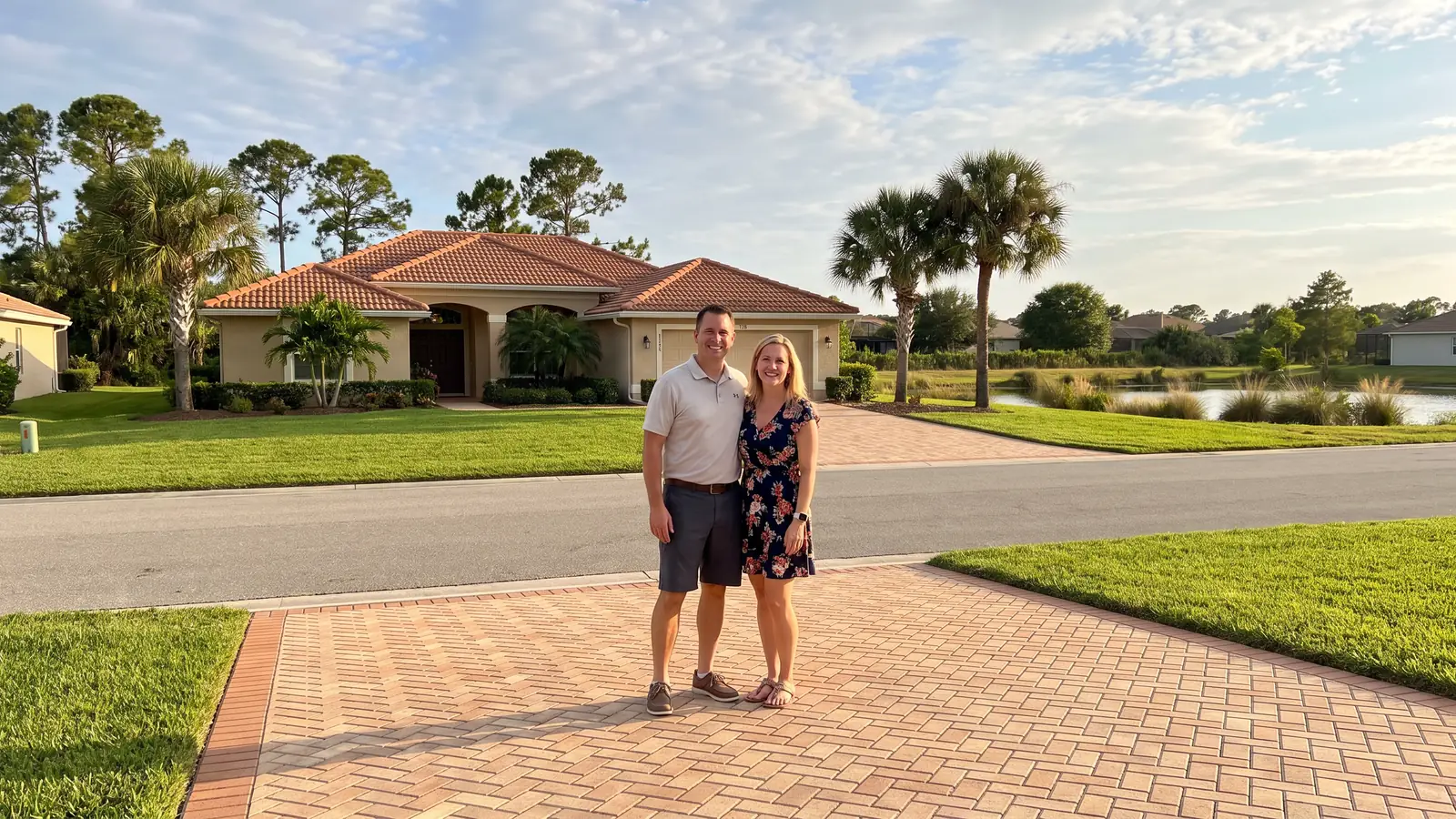
Paver sealing for Melbourne homes
Paver Sealing in Melbourne, FL
Melbourne pavers meet city water, reclaimed water and well water, so call (321) 275-3255 for a free sealing estimate.
- Brings out deeper paver color
- Fresh joint sand helps lock pavers in place
- Gives weeds less room to grow
- Makes the surface easier to keep clean
- Free estimate, no obligation
Request a Free Estimate
Free, no obligation.
Fast, careful paver sealing in Melbourne
Paver sealing in Melbourne starts with a free estimate for your driveway, pool deck, patio or walkway. A local contractor washes the pavers, puts fresh sand back in the joints and applies the sealer. The first answer to a Melbourne request lands within 1 business day, usually much sooner, when you request your free estimate.
Picture the driveway that lost its color to summer sun, with a gray-green film where the sprinkler lands each morning. A wash, fresh joint sand and a new coat bring the color back to one even tone, with no patchy spots left to explain to the neighbors. Call (321) 275-3255 and tell the contractor how old the pavers are and what is near your lot.
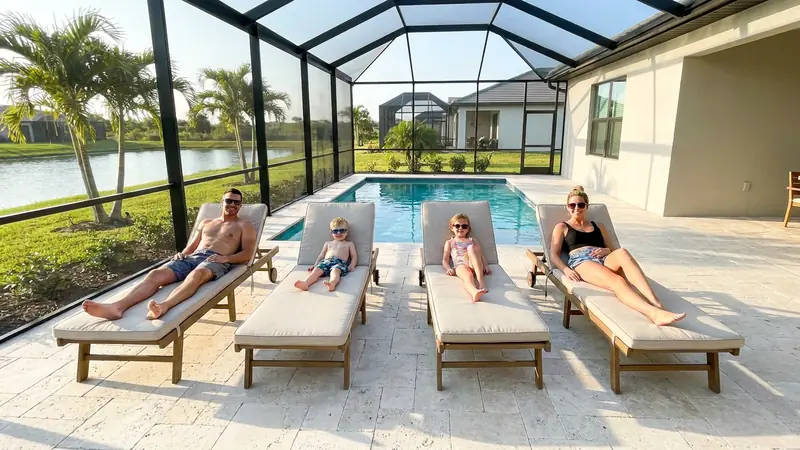
Why hire a local paver sealing contractor in Melbourne?
Melbourne homeowners pick a local paver contractor because the city runs on several kinds of water and stretches from the lagoon to the beachside. A local contractor already knows which questions to ask about each one, so request your free estimate.
Free look at your pavers
A local contractor checks your Melbourne driveway or pool deck at no charge. You see a price before you agree to anything.
A published price range
Brevard County companies publish a range of $1.85 to $4.00 per square foot for the whole job. Hold any Melbourne quote up against that.
Finish choices shown first
Matte keeps a natural look. Gloss adds shine but shows wear sooner, so ask to see a sample on a spare paver before you decide.
You pick the day
You choose the date, the finish and whether to go ahead at all. A Melbourne estimate carries no obligation.
Get Your Free Estimate in Melbourne
Tell us about your pavers in Melbourne.
Free, no obligation
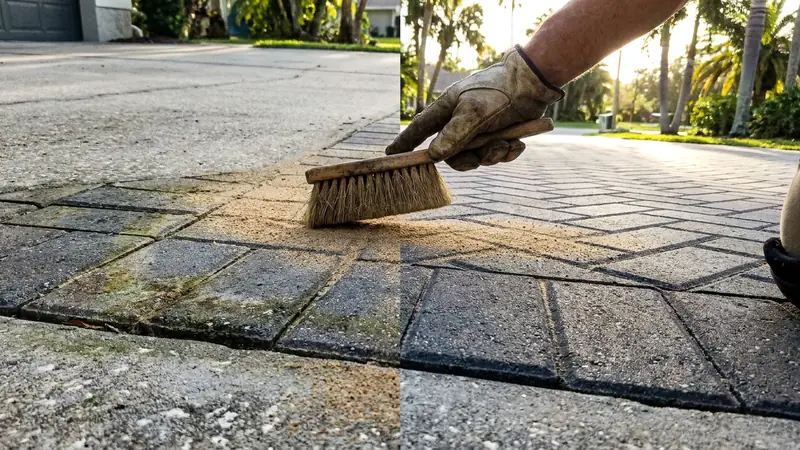
What paver problems show up most in Melbourne?
Sprinklers aimed at the driveway
A City of Melbourne utilities newsletter says broken or misdirected sprinkler heads waste water by spraying sidewalks and pavement. That same spray can leave marks on pavers. UF/IFAS adds that most Florida well water is high in iron and can leave orange stains. If your driveway has rust fans near the edge, the sealer would lock them in, which means they get treated first. Moving a spray head a few inches can also keep new marks from forming.
Wash water headed for the lagoon
About 80 percent of Melbourne's land drains toward the Indian River Lagoon, and the state ordered the city to cut nitrogen and phosphorus runoff. A driveway wash sends water down that same path. The city also tells reclaimed water users not to rinse driveways with it. Ask any contractor where the wash water goes, and ask how it is kept out of the street. A clear answer tells you a lot about the crew.
Salt air on the beachside edge
Part of Melbourne sits on the barrier island, and Rising Tide says salt air and strong sun speed up paver wear in the area. It suggests properties near the beach may need sealing more often. If your home is on the beachside, expect a duller surface sooner than a lot farther inland. A local contractor can tell you what that means for your schedule, and whether a yearly look at the coat makes sense. Pool decks on the barrier island are worth a closer look.
Storms that cut the drying window
Rain here totals about 51 inches in a year, and most of it arrives as thunderstorms between late May and early October. The National Weather Service office in Melbourne logs measurable rain on 100 to 105 days of a normal year. Sealer needs a dry surface, which means a job can slip a day or two after a wet afternoon. Shaded patios and screened pool decks may take longest to dry, so build a little slack into the plan.
An old coat nobody wrote down
Melbourne doubled in size when it merged with Eau Gallie in 1969, and many lots have changed hands more than once. A past owner may have used a product you cannot name. The reason is simple: a water-based product cannot be laid over a solvent-based one. Peeling or patchy spots are a clue that the old coat needs attention before anything new goes on. Keep any receipt or label you find, because it saves guesswork later.
Do golf-course and lagoon-side homes in Melbourne need different sealing?
Which water runs to your lot?
Yes, because the water around your lot changes the job. The city's reclaimed water serves two city golf courses, Crane Creek Reserve and Mallards Landing, along with more than 1,000 homes and businesses. When you request your free estimate, say whether your sprinklers run on reclaimed, city or well water.
Do golf communities add rules?
Baytree and Balmoral is a golf community that Rising Tide names on its Melbourne page. Stellar says HOAs more often support color restoration than tinting, so a plain matte coat may fit better there than a bold new color. Call (321) 275-3255 and mention any association rules before the work is priced.
Which part of town are you in?
Eau Gallie, Downtown Melbourne and the beachside each ask for something a little different, and the contractor needs to know which one is yours. Older streets may hold pavers with an unknown coat, while the barrier island edge sees more salt air. Frame vernacular homes from the early 1900s sit near much newer streets in the same city. Tell the contractor which area you live in, then request your free estimate.
What does paver sealing cost in Melbourne?
What sets a Melbourne quote?
Across Brevard County, companies commonly publish $1.85 to $4.00 per square foot for cleaning, sanding and sealing. Rising Tide says condition, square footage, sealer type, access and prep work all move the number. A Melbourne driveway with a pool deck and lanai costs more in total than a short entry walk, even at the same rate. For a price for your pavers, request your free estimate, and the estimate is free.
What pushes a price higher?
A few things can push a Melbourne quote up. Old sealer that has to be stripped, rust marks that need treatment and joints that lost most of their sand all add steps. A simple open driveway with clean joints sits nearer the low end, while tight access such as a courtyard behind a gate can add labor. Call (321) 275-3255 and talk through which of these describe your pavers before any work begins.
| Paved area | Typical example | Clean, sand and seal |
|---|---|---|
| 300 sq ft | Small patio or walkway | $555 to $1,200 |
| 600 sq ft | Two car driveway | $1,110 to $2,400 |
| 1,000 sq ft | Large driveway or pool deck | $1,850 to $4,000 |
| 1,500 sq ft | Driveway plus pool deck | $2,775 to $6,000 |
Math based on the $1.85 to $4.00 per square foot that Space Coast paver companies publish. Your contractor sets the actual price after seeing the surface. Repairs, leveling and stripping failed sealer are usually extra.
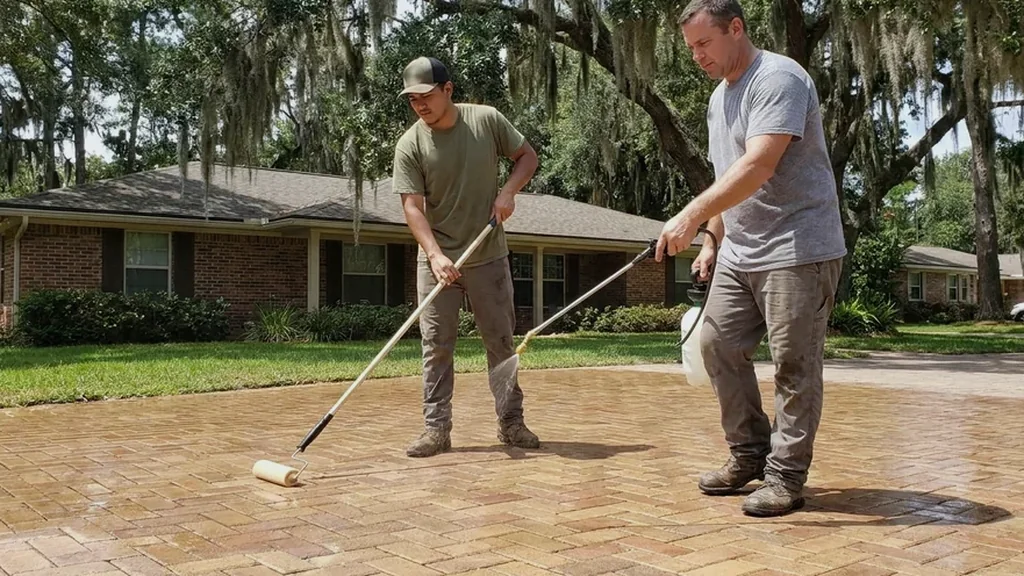
How does a paver sealing job work in Melbourne?
Look at the pavers and the water
The contractor starts with a walk around the driveway, pool deck and walkway. Stellar says sinking or lifted pavers are reset on a compacted base before any sealing. If the surface was sealed before, the old product matters a great deal. Point out where your sprinklers spray and which water feeds them. That short talk shapes the whole plan for the day.
Wash and treat the stains
Next comes the wash, with rust marks and green growth treated first. Stellar describes hot-water pressure cleaning with an oxide remover for rust. Because most of Melbourne drains toward the lagoon, ask how wash water is handled. A contractor should have a plan for it, and you are within your rights to ask for it before you book.
Put the sand back in the joints
A wash carries sand out of the joints, and the contractor refills them ahead of the coat. Stellar notes that set joint sand resists erosion and holds weeds back. Then the surface is swept and given time to dry. In a wet stretch that rest can take longer than you would expect. Pavers with many open joints may need more sand and more time. Ask how many passes the contractor plans, since sand that settles may need a top-up before the sealer goes on.
Wait for a dry surface
Sealer needs a dry surface, and Melbourne's wet season runs from late May to early October. A careful contractor watches the sky and waits, even when the schedule is tight. A screened pool deck or a shaded patio can stay damp longer than an open driveway. One Brevard company says its crew stops when rain looks close. That is the habit you want from whoever you hire.
Apply the finish you chose
Two coats of sealer go down in the finish you picked. A wet look gives more shine, but matte is kinder to a driveway that sees daily tires. Rising Tide advises Melbourne homes to reseal every two to three years. Cars and furniture stay off until the contractor says the cure is done. Ask for the walk-on and parking times in writing.
Complete paver services in Melbourne
What order does the work follow?
A Melbourne job runs in a steady order. The contractor checks for sunken spots and old coatings, washes the surface, sets fresh sand in the joints and lets everything dry. Sealer goes on last so nothing dirty is locked under it. To ask how long each stage takes on your lot and how a slow dry could change it, call (321) 275-3255.
How do driveways and pool decks differ?
Driveways near Babcock Street take daily tires and sprinkler overspray. Pool decks inside screen enclosures face chlorine and constant moisture, so grip and chemical resistance count. Walkways and lanai floors see less wear but still show green film in shade. Say which of these surfaces are yours when you request your free estimate.
How is the sealer chosen?
Sealer choice starts with what is already on the pavers. An unknown old coat has to be identified first, because a water-based product cannot go over a solvent-based one. Stellar lists matte and semi-gloss finishes, and gloss shows wear sooner. Call (321) 275-3255 to talk finish, and mention a pool deck if you have one, since grip matters there.
When does rain move the date?
Melbourne gets measurable rain on about 100 to 105 days a year, so a contractor may move your date after a storm. Sealer needs a dry surface. By Stellar's account the first coat dries within an hour, and the full cure needs one to two days. To set a date that fits the weather, request your free estimate.
Questions to ask before you hire
- Is the finish glossy or matte, and can I see a sample on a spare paver first?
- Is the cleaning done with a surface cleaner or a hand wand, and does it lift the old sealer?
- How do you protect my plants, grass and garage door from overspray?
- How long until we can walk on it, park on it and set the patio furniture back out?
- Will you rinse off the salt film before sealing if my home is near the water?
- Will you send a certificate of insurance before the day of the job?
- Do you re-sand the joints with polymeric sand after the wash, and is that in the quote?
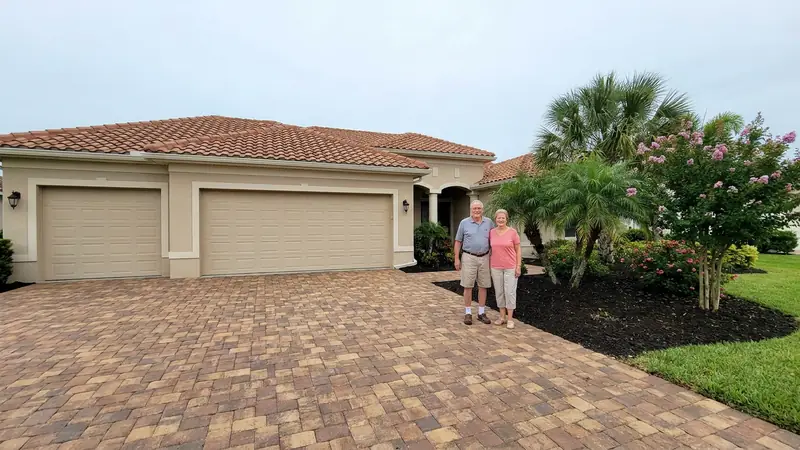
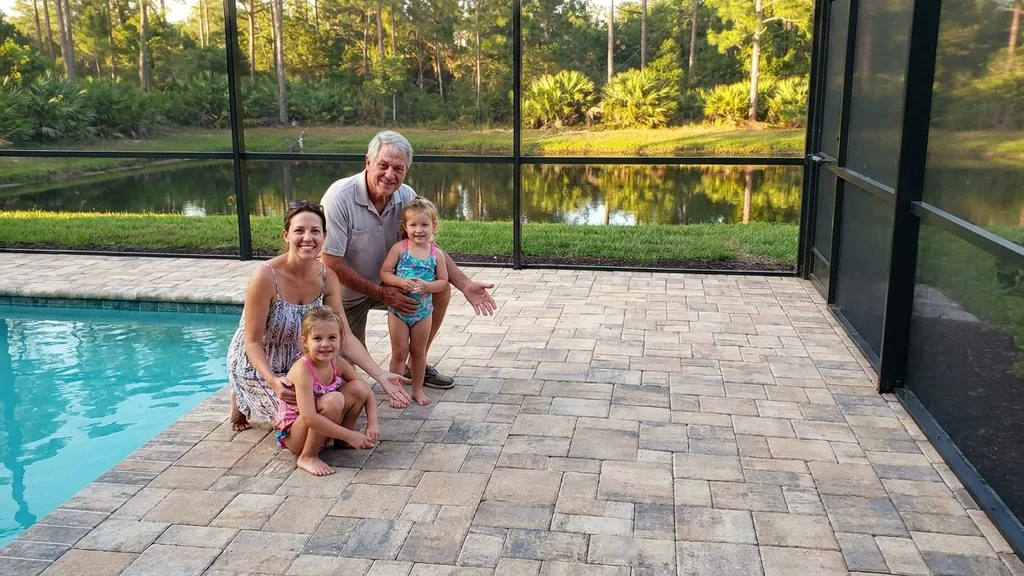
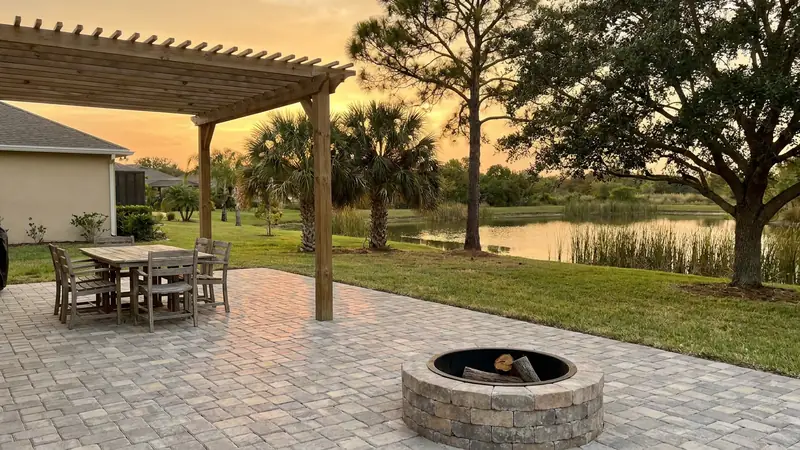
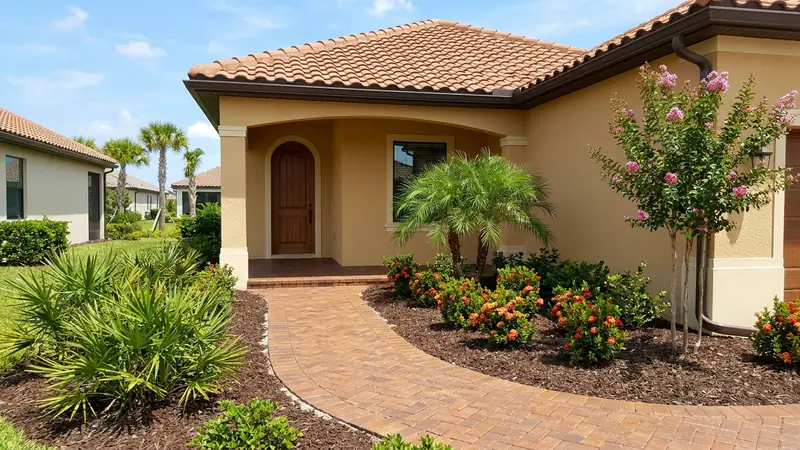
What do sealed pavers look like around Melbourne?
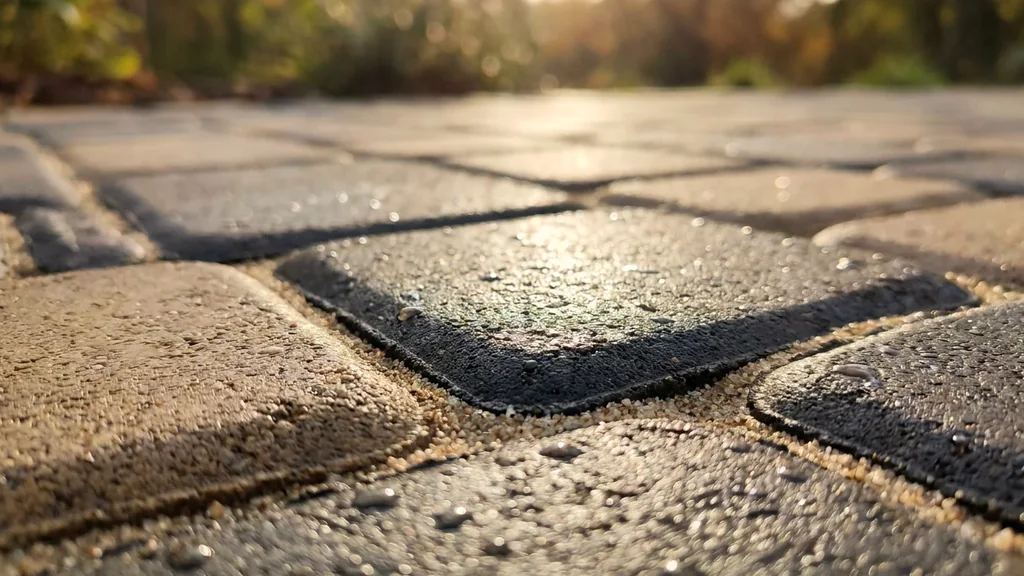
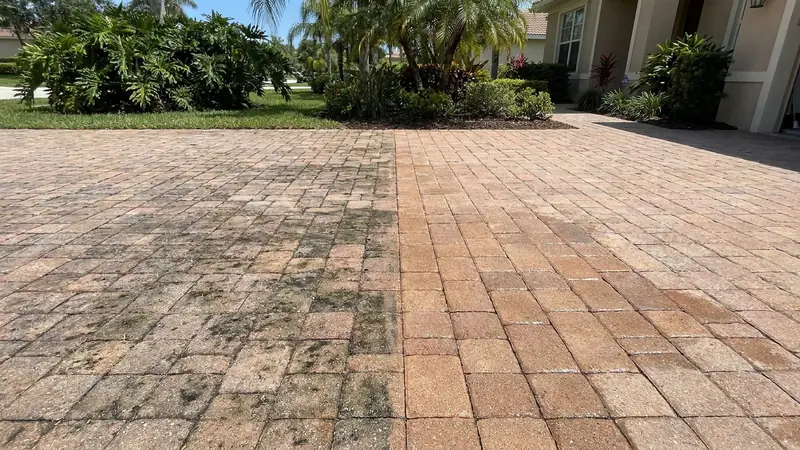
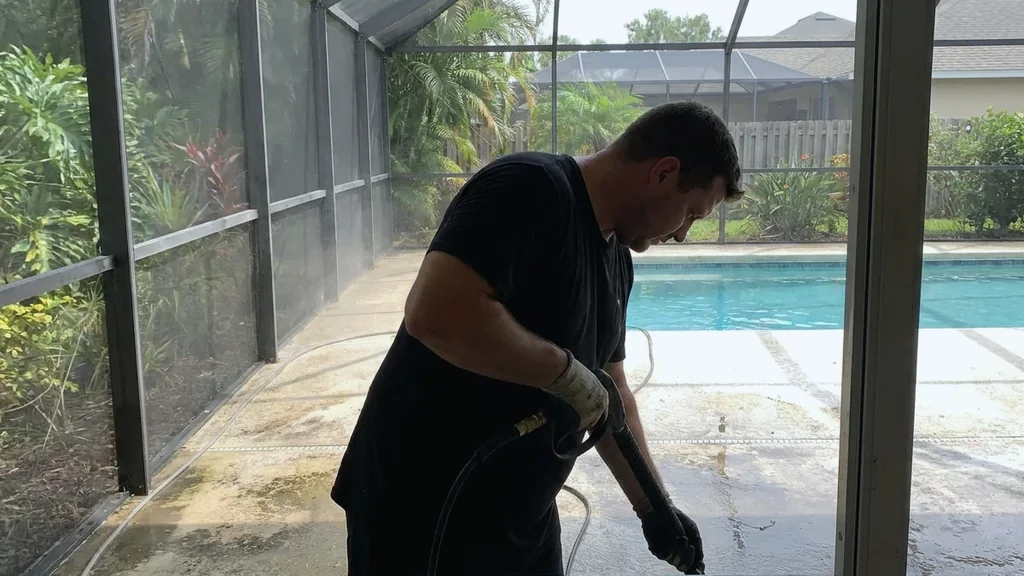
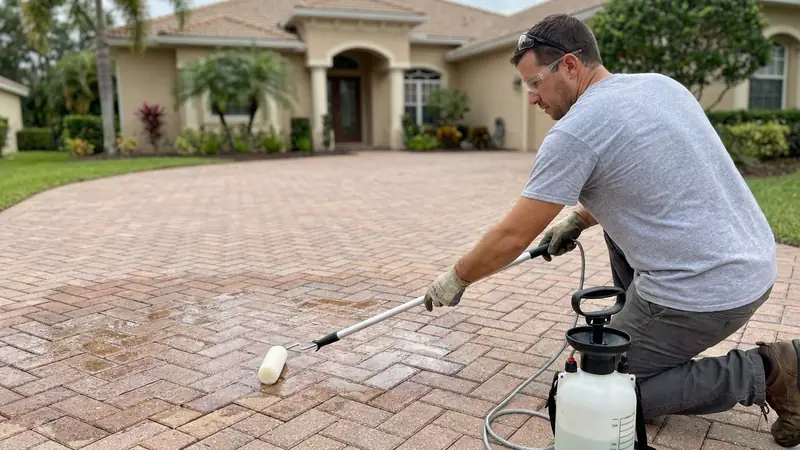
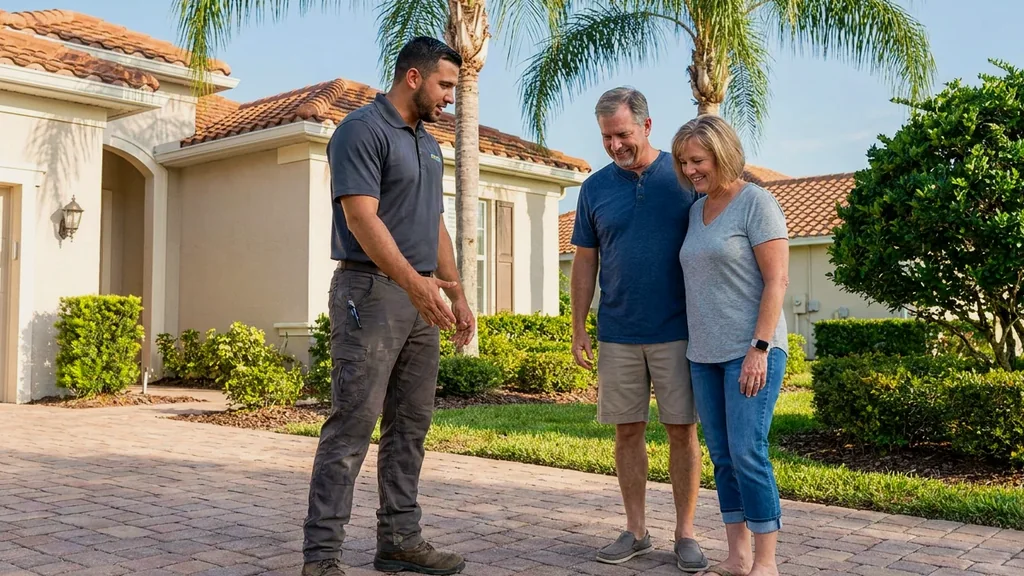
Why local matters in Melbourne
Why does the water source matter?
A local contractor asks which water reaches your pavers. Melbourne uses city water blended from lake and well sources, reclaimed water on more than 1,000 properties, and private irrigation wells. UF/IFAS says most Florida well water is high in iron and can leave orange stains, which a crew from outside the area may not think to ask about. To reach a contractor who works Brevard County, call (321) 275-3255.
What does the lagoon change?
Local knowledge covers the lagoon as well. The state ordered the city to cut nitrogen and phosphorus runoff, and about 80 percent of the city drains toward the lagoon. That is why wash water deserves a plan on your driveway. You can request your free estimate and put that question to the contractor directly.
Why do streets change block to block?
Melbourne is also two towns joined in 1969, so streets change from block to block. Early 1900s frame homes sit near newer neighborhoods and golf communities such as Baytree and Balmoral. Each may bring its own HOA rules and its own paver history, which is hard to guess from across town. If an association is involved, request your free estimate and mention it up front.
How did Melbourne grow into the city it is today?
Where did the first downtown stand?
Melbourne began as a settlement called Crane Creek and took its name from its first postmaster, Cornthwaite John Hector, an Englishman who had lived in Melbourne, Australia. A 1919 fire burned most of the first downtown along Front Street, and the district was rebuilt west of US 1. Today's Downtown Melbourne sits there. If your home is near downtown, where older pavers may carry more than one coat, request your free estimate.
How did two towns become one city?
Naval Air Station Melbourne trained pilots from 1942 to 1946, and that land now makes up most of Melbourne Orlando International Airport. Florida Tech began in 1958 as Brevard Engineering College, built for people working in the space program. In 1969 Eau Gallie and Melbourne merged, which doubled the city. Near the airport or the campus, where a local contractor already knows the traffic, call (321) 275-3255 and name your street.
Frequently Asked Questions
How often should I seal pavers in Melbourne?
Plan on every two to three years, which is what Rising Tide tells Melbourne homeowners, and sooner near the beach or in strong sun. Faded color and weeds in the joints are signs it is time. A coat near a pool or the beach may need a look sooner.
Does Melbourne have hard water, and will it stain my pavers?
Melbourne's drinking water is blended from lake water and reverse osmosis well water, and the city's monthly report shows raw well water far harder than the finished water. Orange stains come from iron in well water, UF/IFAS says. Ask whether your sprinklers run on a private well. If they do, the contractor can plan the rust treatment before sealing.
Is pressure washing a good way to clean pavers before sealing in Melbourne?
Yes, a wash is the first step, and one Brevard company uses hot-water pressure cleaning with runoff capture. Washing also pulls sand from the joints, so it is replaced before sealing. Ask how wash water is handled, since about 80 percent of Melbourne drains toward the lagoon.
How much does pressure washing and sealing pavers cost in Melbourne?
Prices published in Brevard County span $1.85 to $4.00 per square foot for the whole job. Condition, size, sealer type, access and prep work move the final number. Ask for the total square footage in writing so you can check the math. A written quote also names the sealer and the number of coats, which makes bids easy to compare.
Do I need HOA approval to seal pavers in Melbourne?
It depends on your community, so ask your association first. Stellar says HOAs more often support color restoration than tinting, which suggests a coat that keeps the natural color is the easier request. Golf communities such as Baytree and Balmoral are worth a quick call. Many associations have a short form, and a reply can take a few days, so ask early.
Can reclaimed water be used to rinse my Melbourne driveway?
No. The City of Melbourne lists rinsing sidewalks and driveways among the uses to avoid for reclaimed water, along with drinking, filling pools and washing vehicles. The same water is fine for lawns and landscapes. Ask the contractor what water the crew brings or hooks up to.
What should I ask a contractor about wash water in Melbourne?
Ask where the water goes, since about 80 percent of Melbourne drains toward the Indian River Lagoon. Stellar describes capturing runoff with a reclamation system, which is the kind of plan to listen for. Also ask how the crew keeps cleaner off plants and screens. A clear answer is worth more than a low price.
Can rust from sprinklers be treated before my Melbourne pavers are sealed?
Yes, rust gets treated ahead of the coat, since sealer would hold it in. Stellar lists an oxide remover for this job. UF/IFAS says most Florida well water is high in iron, so check which water your sprinklers use. Spray that stops landing on the pavers helps keep new rust from forming.
Ready for a Free Estimate in Melbourne?
Call (321) 275-3255 and tell us about your pavers.
Free, no obligation